
Navigating End-of-Life Conversations: A Compassionate Guide with Dr. Andy Arwari
The journey through serious illness, caregiving, and ultimately, end-of-life planning, can feel overwhelming. It's a path laden with complex decisions, emotional weight, and often, uncertainty. On a recent episode of the Digital Legacy Podcast, Niki Weiss sat down with Dr. Andy Arwari, a distinguished Hospice and Palliative Care Physician based in the Miami area. Dr. Arwari brought a deeply empathetic perspective to unravelling some of the most challenging aspects of late-life care, offering clarity and comfort in a space often fraught with fear. Dr. Arwari emphasizes that his specialty, hospice and palliative care, is not about giving up, but rather a holistic approach to enhancing quality of life for individuals and their families facing serious illness. It's a continuous spectrum of care, adapting to a patient's evolving needs and goals.
About This Blog
The journey through serious illness, caregiving, and ultimately, end-of-life planning, can feel overwhelming. It's a path laden with complex decisions, emotional weight, and often, uncertainty. On a recent episode of the Digital Legacy Podcast, Niki Weiss sat down with Dr. Andy Arwari, a distinguished Hospice and Palliative Care Physician based in the Miami area. Dr. Arwari brought a deeply empathetic perspective to unravelling some of the most challenging aspects of late-life care, offering clarity and comfort in a space often fraught with fear.
Dr. Arwari emphasizes that his specialty, hospice and palliative care, is not about giving up, but rather a holistic approach to enhancing quality of life for individuals and their families facing serious illness. It's a continuous spectrum of care, adapting to a patient's evolving needs and goals.
Understanding the Spectrum of Care: Palliative vs. Hospice
Many people use "palliative care" and "hospice" interchangeably, but Dr. Arwari clarifies the distinct yet interconnected roles of each.
Concurrent Palliative Care: This phase focuses on supporting patients with serious illnesses who are still receiving active, potentially curative treatments. It's about providing holistic care alongside these treatments, with a multidisciplinary team addressing physical, emotional, social, and spiritual needs. The ultimate goal is to improve the patient's quality of life regardless of their disease trajectory.
End-of-Life Palliative Care (Hospice): This comes into play when a patient's life expectancy is deemed to be at its end, typically within six months. The focus shifts from curative treatments to comfort and symptom management, ensuring the highest possible quality of life during this final stage. Dr. Arwari stresses that hospice isn't about "giving up" but about a transition of care, prioritizing comfort and dignity.
The Holistic Care Team: More Than Just Doctors
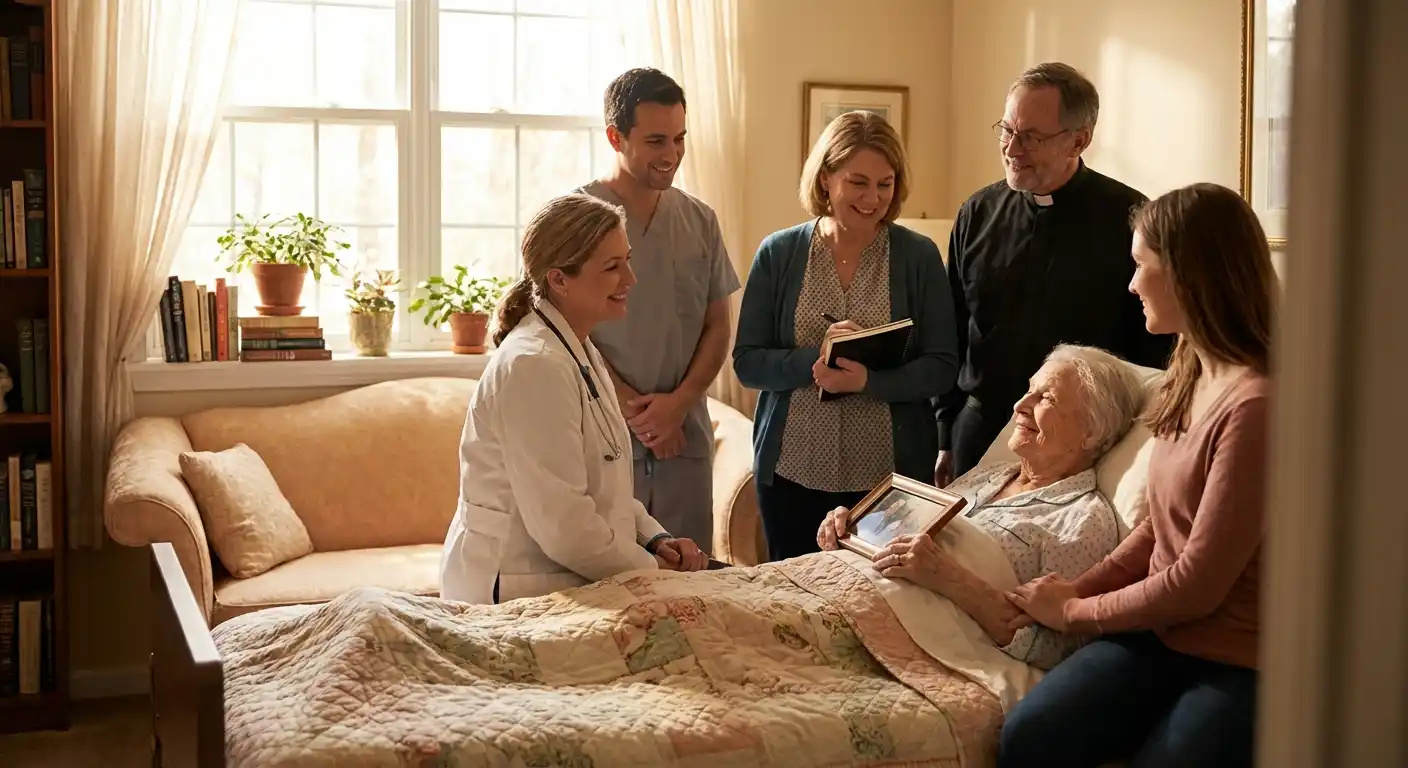
When we talk about "holistic care," it's not just a buzzword. Dr. Arwari highlights the comprehensive team that comes together to support patients and their families. This includes:
Medical Professionals: Doctors, nurse practitioners, and nurses manage symptoms and coordinate care.
Social Workers: They navigate complex emotiona and practical challenges, connecting families with resources.
Chaplains: They offer spiritual support, respecting diverse beliefs and traditions.
Health Aides: They provide essential personal care and comfort.
Therapists: Physical, occupational, and speech therapists help maintain functionality and independence where possible.
Pharmacists: They manage medications, ensuring comfort and minimizing side effects.
Volunteers: They provide invaluable companionship and support.
Dr. Arwari passionately advocates for a team approach, rejecting the traditional hierarchy. "I am part of a team," he states, "It's not my team and I'm not the leader of the team… If we perpetuate that, then we're really not practicing holistic care." Every member's expertise is crucial in crafting the best possible care plan.
Dispelling Myths: What Hospice Really Means
One of the biggest misconceptions about hospice is that it means all treatments stop. Dr. Arwari directly addresses this.
Antibiotics in Hospice: He explains that antibiotics might still be used if an infection is causing distress or significantly impacting a patient's quality of life. The decision is always based on the patient's comfort and goals, not a blanket prohibition.
Medication Management: Patients often have a deep emotional attachment to medications they’ve taken for years, such as blood pressure medication. Dr. Arwari clarifies that in end-of-life care, the purpose of these medications needs re-evaluation. If a medication is no longer preventing long-term damage and instead causes burden or interacts negatively with other drugs, it might be discontinued. The goal is to maximize comfort and minimize side effects, especially considering the potential for polypharmacy as patients age.
The Untapped Resource: Hospice as an Entitlement
Perhaps one of the most striking revelations from the discussion is that in the United States, hospice is an entitlement program, fully funded by Medicare Part A.
"We are the only country in the world that has a fully funded end-of-life service," Dr. Arwari emphasizes. This means it's a benefit earned through years of contributing to Medicare, not a handout. He laments that many people still view hospice as a "death sentence" rather than a valuable, earned service that offers vital support and empowers patients to define their final chapter.
Eligibility vs. Appropriateness: Dr. Arwari distinguishes between being "eligible" for hospice (based on medical criteria) and being "appropriate" (when the patient or their proxy chooses to elect the benefit). He stresses that no one can be forced into hospice. It's a choice, made with full education and understanding of the benefits.
The Complexities of Medical Aid in Dying (MAID)
The conversation also touched upon the sensitive topic of Medical Aid in Dying (MAID), also known as Death with Dignity. Dr. Arwari shares his perspective on MAID, acknowledging the patient's right to choice but underscoring the critical role of comprehensive end-of-life care.
He explains that he starts by exploring why a patient might be considering MAID. For him, true autonomy means having all options clearly presented and understood. If MAID is offered in a vacuum, without understanding the comprehensive support hospice and palliative care can provide, it's not a truly informed choice. His primary focus remains on mitigating suffering and enhancing quality of life through the interdisciplinary team.
Empowering Your Future: Practical Takeaways
Dr. Arwari's insights offer a powerful reminder that planning for the end of life is an act of love, both for ourselves and for those we care about. It removes the burden of agonizing decisions from our loved ones and ensures our wishes are honored.
Here are 2 to 3 practical steps you can take today:
Initiate Family Conversations: Discuss your preferences for healthcare with trusted family members. Even if they're uncomfortable, these conversations are invaluable.
Complete and Update Advance Directives: Speak with your primary care physician about filling out a living will, medical power of attorney, or other advance care planning documents. Make sure to review and update these regularly.
Understand Your Benefits: Educate yourself on what hospice and palliative care truly entails. Recognize it as an earned entitlement that can provide profound comfort and support.
These steps, though seemingly small, collectively form a profound foundation for a peaceful and dignified end-of-life journey.
To learn more about Dr. Andy Arwari's work and connect with him, you can find him on LinkedIn. For a deeper dive into this vital discussion, listen to the full episode of the Digital Legacy Podcast with Niki Weiss.Take the Next Step: Start Planning with My Final Playbook


Related Blog
Duis mi velit, auctor vitae leo a, luctus congue dolor. Nullam at velit quis tortor malesuada ultrices vitae vitae lacus. Curabitur tortor purus, tempor in dignissim eget, convallis in lorem.
Comments