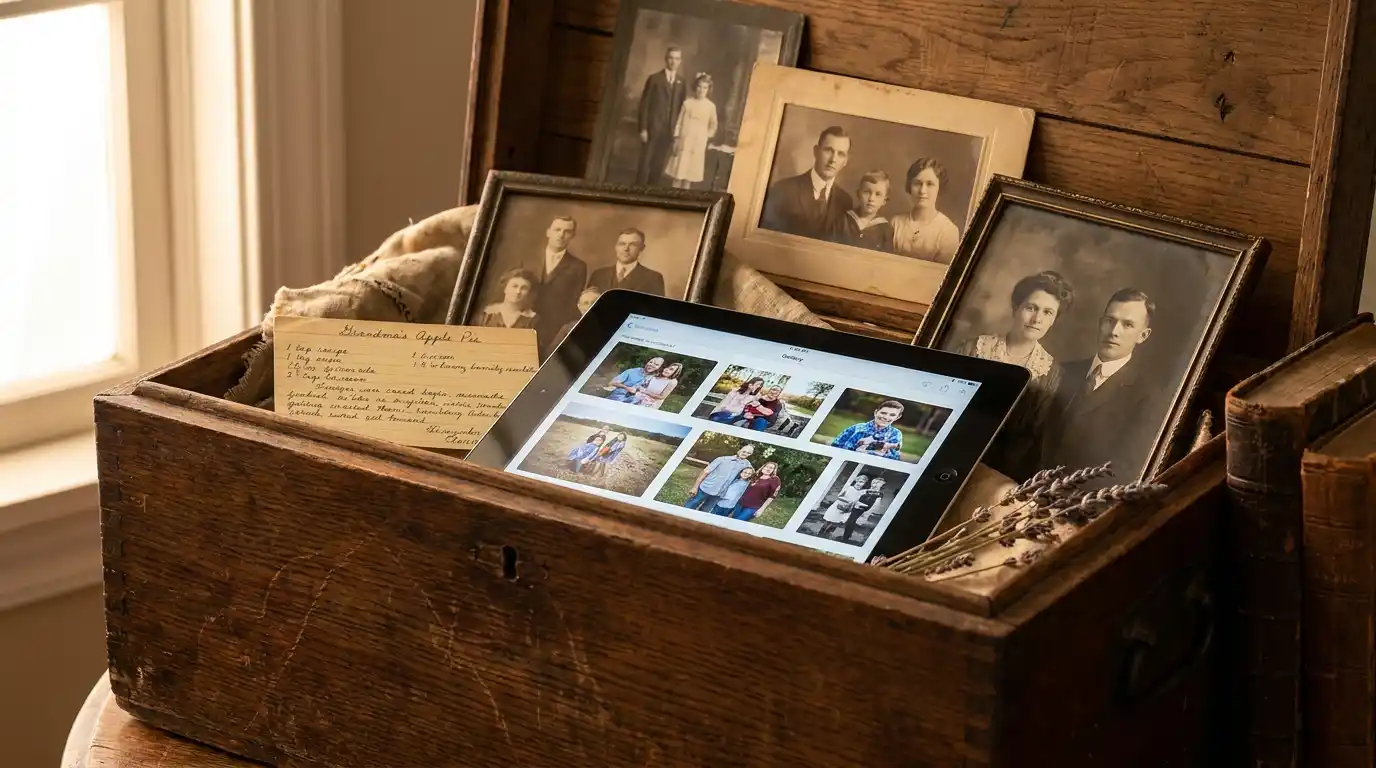
The Critical Need for Digital Vaults in a High-Tech World

In today’s fast-paced, always-online world, the idea of planning for the end of life can feel like an emotional minefield. Yet, as our lives become increasingly tech-based, it's more important than ever to address a new kind of legacy—our digital one.

About This Blog

In today’s fast-paced, always-online world, the idea of planning for the end of life can feel like an emotional minefield. Yet, as our lives become increasingly tech-based, it's more important than ever to address a new kind of legacy—our digital one.

We’re not just talking about writing a will or having a power of attorney. We're talking about the massive, tangled web of accounts, logins, documents, photos, and essential life details that live online, in the cloud, or locked away on your personal devices. Whether it's your crypto wallet, your Netflix password, or the deed to your home, these digital assets are now integral parts of your legacy.

The Modern Legacy Problem

The traditional estate planning model hasn't evolved to meet the digital reality we live in. We carry our lives in smartphones and access essential services through email accounts, banking apps, and cloud drives. But what happens when we’re not there to manage them anymore?

Imagine this: You’re on vacation in Bora Bora, enjoying a once-in-a-lifetime trip, and a family emergency strikes. You're the power of attorney for a loved one, and critical medical documents are locked away in a safe—thousands of miles from where they’re needed. That kind of nightmare scenario is far too common, and it's one that many families don’t even consider until it’s too late.

The result? Families scrambling. Executors digging through drawers and desktop folders. Assets unclaimed. Critical care delayed. Emotional stress piled on top of grief.

Enter the Digital Vault

This is where digital vaults come in—not just as a nice-to-have convenience, but as a fundamental tool for modern preparedness. A digital vault is a secure, encrypted hub where you store your most important documents, account details, asset records, and personal notes—all in one place, accessible when and where they’re needed.

But more than just a vault, the best solutions offer intuitive organization. Tools like Prisidio allow you to sort your life into four simple categories: People, Places, Things, and Documents. This structure makes it easy to map out not just what you have, but who needs to know about it and when.

Why Storytelling Matters

What makes this movement powerful isn’t just the logistics of secure document storage—it’s the human layer. It's the ability to embed context alongside your content. Knowing that “green blanket in the closet” is the one your grandmother knitted for you 40 years ago makes it far more than just a blanket. Without that context, it might end up in a garage sale. With it, it becomes a treasured heirloom.

By providing that emotional and narrative context, digital planning transforms from a sterile, morbid task into an act of love and care. It ensures that the story behind your belongings—the why, not just the what—gets passed down too.

Barriers to Getting Started

So why don’t more people plan ahead digitally?

Because it’s overwhelming. Because it’s emotional. Because we assume we have time. Or perhaps, we’re just not sure where to start.

The good news is, you don’t have to do it all at once. Start small. Store one document. List one person who should have access. Add one asset. Tiny habits lead to long-term change. And tools like Prisidio are designed to support this incremental approach—whether you’re uploading a driver's license, cataloging your crypto wallet, or noting where your original will is stored.

The Rise of AgeTech

This entire field is part of a larger trend called “AgeTech”—a sector focused on helping those over 50 live longer, more organized, more empowered lives. And while it’s especially relevant to older adults, digital preparedness is for everyone.

As our society faces a rapidly aging population, the pressure is on to create systems that reduce the burden on families and caregivers. AgeTech isn’t just about smart pill bottles or elder-friendly wearables; it’s about creating infrastructure for peace of mind. That means having systems in place that help people access, share, and understand critical life information—at any age.

Reclaiming Control of Our Data

One of the most revolutionary promises of digital legacy planning is the concept of data sovereignty. In a world where we hand over so much of our personal information to corporations, governments, and tech giants, a secure digital vault lets you take back some of that control.

You're not just storing documents—you’re deciding who sees them, when, and how. You’re setting the terms. You're safeguarding your identity against the growing threats of cybercrime and digital loss. And, you're ensuring that your family isn’t left playing detective in the wake of your passing.

Legacy Isn’t Just for the Wealthy

This isn’t just a solution for the wealthy or highly organized. Whether you’re a young adult with a few key accounts, or a parent with a drawer full of insurance paperwork, you have a legacy to protect. And even if you don’t have a formal will yet, getting started with a digital plan is one of the most impactful things you can do.

From pet care details to digital subscriptions to family traditions, your digital life is deeply intertwined with your physical one. It’s time we start treating it that way.

Take the First Step Toward Your Digital Legacy

Whether you're ready to start cataloging your digital assets or you're simply curious about what that even looks like, this conversation is more urgent than ever. Tools like Prisidio make it easy, secure, and human.

Ready to get inspired and informed? Watch the full episode of the Digital Legacy Podcast on YouTube, where Glenn Shimkus and Nikki Weiss dive deeper into the importance of planning in the digital age, personal stories of preparedness, and the emotional journey of leaving behind more than just stuff—but a story.


If something happened to you, would the people in your life know what to do? Don't leave your loved ones in the dark. Start developing your end-of-life and digital legacy plan. Download the My Final Playbook App on the App Store or Google Play or visit us online at Final-Playbook.Passion.io  to get started. With My Final Playbook, you'll be able to start and learn how to organize your legal, financial, physical, and digital assets today. Until then, keep your password safe and your playbook up to date.

Related Blog

Duis mi velit, auctor vitae leo a, luctus congue dolor. Nullam at velit quis tortor malesuada ultrices vitae vitae lacus. Curabitur tortor purus, tempor in dignissim eget, convallis in lorem.

The New "You" at Work: Who Owns Your Digital Ghost?

You have spent years building your career. You have attended countless meetings, written thousands of emails, and maybe even recorded training videos for your team. You have poured your knowledge, your voice, and your personality into your work. But have you ever stopped to wonder what happens to all of that digital "you" after you leave a job or even after you pass away? It is a question that feels like science fiction, but it is rapidly becoming our reality. I recently spoke with Malvika Jethmalani, a human resources expert and the founder of Atvis Group, on the Digital Legacy Podcast. We explored a topic that sits at the uncomfortable intersection of technology, employment, and grief: the rise of the digital employee . From Human to "Humic" Malvika shared a fascinating concept called "humics." These are the uniquely human traits that machines cannot replicate: creative thinking, critical thinking, and social authenticity . Think about it. An AI can write a report, but can it sense the tension in a room and crack a joke to lighten the mood? Can it ethically challenge a decision that feels wrong? Can it form a genuine bond with a grieving colleague ? As AI becomes more integrated into our workplaces, our value as humans will not come from being faster or smarter than the machines. It will come from being more human . The Rise of the Corporate Avatar Here is where things get tricky. Companies are increasingly using AI to create digital avatars or "personas" of their employees. Imagine you record a series of training videos. Your company could use AI to take your voice and likeness and create new videos long after you have moved on to a new job . Or consider this: Gartner predicts that by next year, 70% of new employment contracts will include clauses about AI representations of your persona. This raises huge questions. Who owns your digital twin? If your avatar is used to train your replacement, should you get paid? What if your digital self says something you would never say ?

Leaving A Music Legacy in the Digital Age

This week on Death and Dying in the Digital Age, we consider end-of-life care and the legacies we leave behind. Niki Weiss sat down with accomplished music therapists Brooke Carroll Lemchak, PhD and Karen Dennery Melita, MMT, MT-BC to explore how music therapy helps bridge the gap between life and death while creating lasting emotional connections that can be there for loved ones when you no longer are. Both Brooke and Karen bring extensive expertise to this conversation, having dedicated their careers to music therapy after completing rigorous academic and clinical training at Temple University. Their combined experience spans decades of working with hospice patients across all age groups, from young children to elderly adults. As board-certified music therapists, they've witnessed firsthand how music can transform end-of-life experiences and create meaningful legacies for those left behind. The Power of Musical Memory in End-of-Life Care Scientific research has shown that musical memories are stored in the prefrontal cortex, one of the last areas of the brain to deteriorate as we age. This explains why individuals with advanced dementia who struggle to recognize family members can still recall and sing along to songs from their youth with perfect clarity. For music therapists working in hospice settings, this connection becomes a powerful way to maintain meaningful relationships until the very end. Through carefully selected songs and musical interactions, patients can express emotions, share memories, and connect with loved ones even when traditional communication becomes difficult. The therapeutic value extends beyond the patient to family members, who often find comfort in seeing their loved ones engage with familiar music. You can create new positive memories that family members can cherish long after their loved one has passed, helping to balance the challenging emotions that come with loss. Creating Musical Time Capsules for Loved Ones In today's digital age, creating musical legacies has become more accessible than ever. Modern technology allows us to easily compile and preserve meaningful songs that represent our relationships with different people in our lives. Unlike physical recordings that can deteriorate over time, digital platforms ensure these musical memories remain intact for future generations and can be a preservation of your legacy. Music therapists encourage people to start building these musical time capsules while they're healthy, rather than waiting until they face a health crisis. This allows for thoughtful selection of songs that truly represent relationships and experiences, creating more meaningful collections for loved ones. The process of creating musical legacies can be therapeutic in itself, helping individuals process their emotions and reflect on important relationships in their lives. It becomes a way to express feelings that might be difficult to put into words, especially for those who struggle with verbal expression. The Impact of Original Songs Sometimes, existing songs aren't enough to express the complex emotions and messages we want to leave behind. Music therapists often work with patients to create original songs that address specific relationships or unresolved feelings. These personalized compositions become powerful tools for healing and closure as well as a personal record to share with future generations. One particularly moving example involved a patient with an estranged daughter. Through songwriting, he found a way to express his regrets and love in a way that traditional communication hadn't allowed. While the song's reception by his daughter remained uncertain, the process itself provided vital emotional release and closure for the patient. The creation of original music often serves multiple purposes: it helps patients process their own emotions, provides a creative outlet during difficult times, and leaves behind a unique, personal legacy for loved ones. These songs become time capsules of emotion, carrying messages of love and healing across generations. Technology's Role in Preserving Musical Legacies Here are several ways technology has revolutionized how we create and preserve musical legacies: 1. Digital Storage Platforms Cloud-based music libraries Dedicated playlist folders for different loved ones Backup systems to prevent loss 2. Recording Options Voice memo applications Professional-quality recording software Digital audio workstations 3. Sharing Capabilities Easy distribution to family members Ability to add personal notes to songs Options for future scheduled sharing Modern digital tools have transformed how music therapists work with patients and how individuals can create their own musical legacies. What once required extensive physical sheet music collections can now be accessed instantly through digital libraries. This accessibility allows for more spontaneous and responsive music therapy sessions while ensuring that created works remain preserved for future generations. Time to Start Your Legacy The time to start creating your musical legacy is now, not when facing end-of-life decisions. Begin by thinking about the special people in your life and the songs that remind you of them. Consider creating digital folders for each loved one, filling them with meaningful music that represents your relationship. Your musical legacy doesn't have to be complex or professionally produced. It can be as simple as a playlist of songs that tell your story or express your feelings. The key is to start the process while you have the clarity and time to make thoughtful choices about what you want to leave behind. Don't wait until tomorrow to begin creating these precious gifts for your loved ones. Whether through existing songs or original compositions, music provides a unique way to ensure your love and memories live on. In the end, these musical legacies become bridges across time, allowing your voice to continue speaking to future generations through the universal language of music. Don't leave any pieces of your legacy to chance. As a next step, you can start and develop your plan by downloading the app, My Final Playbook. Through this app, you'll be able to start and learn how to organize your legal, financial, physical, and digital assets today. In the digital age, planning your legacy is just a click away. Until then, keep your password safe and your playbook up to date.

Comments