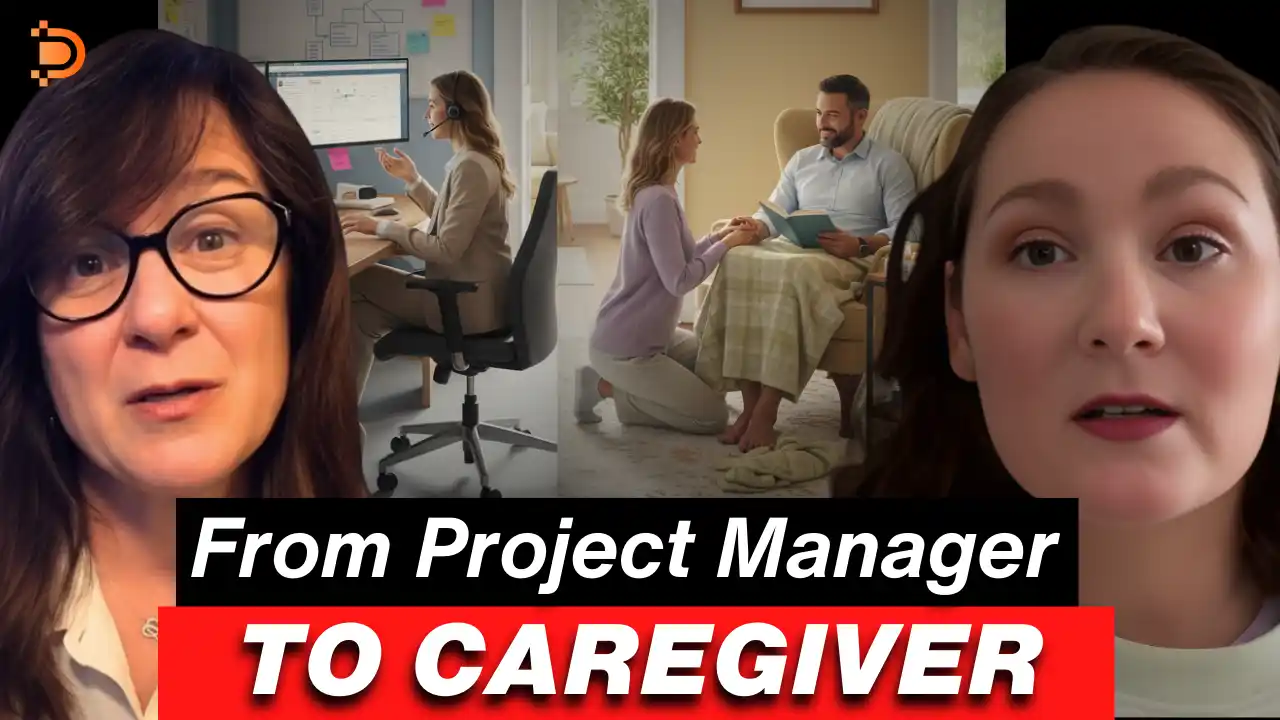
Caregiving is a Project: Balancing a High-Stakes Career with Terminal Caregiving | Anna Myers

What happens when the "Black Diamond" skier you love suffers a stroke and a terminal brain cancer diagnosis—just two weeks after your engagement? In this episode of The Digital Legacy Podcast, host Niki Weiss, Digital Thanatologist, sits down with a very special guest: her daughter, Anna Myers. Anna shares the harrowing journey of caregiving for her husband, James, who has been battling a rare brain cancer for 12 years, and the sudden "180-degree shift" that occurred when radiation treatment led to a debilitating stroke in 2025. You’ll discover: How a routine scan ended seven years of "no evidence of disease" and triggered a snowball of aggressive medical decisions. Moving from independent partners to a "wheelchair-bound" reality, and how to rearrange your physical and emotional life overnight. Why waiting for a terminal diagnosis to start your Final Playbook is a dangerous game that leads to legal and mental incapacity. A raw look at "Digitality"—facilitating a corporate presentation while your spouse is violently ill in the next room. Why they chose to stop radiation treatment when the "quantity" of life began to destroy the "quality". How the couple uses humor and spiritual curiosity to prepare for a connection that lasts "through the end of time". Because your legacy isn't for you—it’s for the people who have to pick up the pieces when you can no longer hold them yourself.
0:00
0:00
Advertising will end in
play_arrow
pause
replay_10
forward_10
volume_up
volume_down
volume_off
share
speed
Skip ad
close
close
close
close
close

Description:

What happens when the "Black Diamond" skier you love suffers a stroke and a terminal brain cancer diagnosis—just two weeks after your engagement?

In this episode of The Digital Legacy Podcast, host Niki Weiss, Digital Thanatologist, sits down with a very special guest: her daughter, Anna Myers. Anna shares the harrowing journey of caregiving for her husband, James, who has been battling a rare brain cancer for 12 years, and the sudden "180-degree shift" that occurred when radiation treatment led to a debilitating stroke in 2025.

You’ll discover:

  • How a routine scan ended seven years of "no evidence of disease" and triggered a snowball of aggressive medical decisions.

  • Moving from independent partners to a "wheelchair-bound" reality, and how to rearrange your physical and emotional life overnight.

  • Why waiting for a terminal diagnosis to start your Final Playbook is a dangerous game that leads to legal and mental incapacity.

  • A raw look at "Digitality"—facilitating a corporate presentation while your spouse is violently ill in the next room.

  • Why they chose to stop radiation treatment when the "quantity" of life began to destroy the "quality".

  • How the couple uses humor and spiritual curiosity to prepare for a connection that lasts "through the end of time".

Because your legacy isn't for you—it’s for the people who have to pick up the pieces when you can no longer hold them yourself.


Related Podcast

The Prison Hospice Project: Training Inmates for End-of-Life Care | Fernando Murillo

What happens when the "worst thing you’ve ever done" is the only way society defines you, even as you face your final breath? In this moving episode of The Digital Legacy Podcast, host Niki Weiss, Digital Thanatologist, sits down with Fernando Murillo, a lead trainer for the Humane Prison Hospice Project. Fernando shares his remarkable journey from being incarcerated at age 16 to serving as a peer caregiver in California’s prison hospice system for over five years. They explore the "carceral end-of-life crisis," where one in five incarcerated people in the You’ll discover: The reality of the only licensed hospice in the California prison system and how it operates in the face of restrictive carceral laws. Fernando’s philosophy on why kindness and trust are the most valuable assets in the end-of-life journey. How incarcerated caregivers act as scribes and witnesses to the legacies of those society has "swept under the carpet". Why the Humane Prison Hospice Project provides more extensive end-of-life training than many traditional medical schools. The staggering data showing how hospice work fundamentally rehabilitates those providing the care. The new infrastructure being built to provide a dignified "destination" for cancer patients released from prison to die in the community. Because if we can foster compassion and dignity in the most restrictive settings on earth, there is no excuse for not doing it in our own communities.

Listen Now
What happens when the modern business of death paves over the natural cycle of life? | Hye Kyung (HK) Lee

In this episode of The Digital Legacy Podcast, host Niki Weiss sits down with HK, the founder of Eon Woods. They explore the broken, profit-driven funeral industry and HK's mission to marry natural burial with land conservation by bringing "conservation cemeteries" to major metropolitan areas like New York City. From uncovering the real reason cemeteries push you to buy a concrete vault to understanding how the Civil War birthed the modern funeral home, this conversation radically shifts how we think about final disposition and environmental stewardship. You’ll discover: The Concrete Vault Myth: Cemeteries require expensive concrete vaults primarily to prevent lawns from sinking, ensuring large mowers and heavy machinery can easily drive over the grounds. Three Levels of Green Burial: The natural burial spectrum includes Hybrid cemeteries, Natural Burial grounds, and Conservation Burial, which pairs the burial process with active ecological stewardship and land conservation. The Civil War Origins of Embalming: The modern industrial funeral process originated during the Civil War as a lucrative way to preserve and ship fallen soldiers back to their hometowns. The 1% Market: The demand for conservation burials mirrors the demographic for home births, highlighting a need for roughly 400 sites in the U.S., a stark contrast to the fewer than 20 that currently exist. Bureaucratic Roadblocks: Opening a new cemetery in dense areas like New York State is highly restrictive and cumbersome compared to states like South Carolina, which have minimal legislative hurdles. Because leaving a legacy shouldn't mean leaving behind an "underground apartment building that no one will ever see".

Listen Now

Comments