
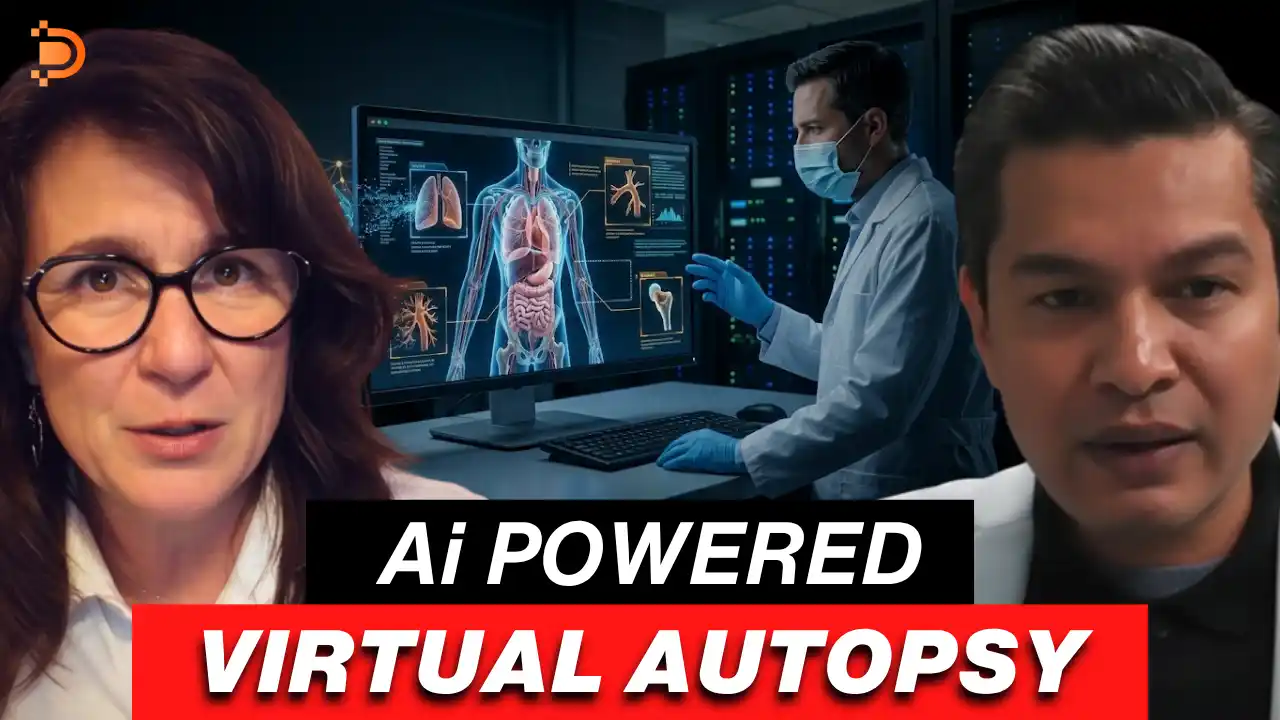
How a Virtual Autopsy Solves a Case in 20 Minutes | Virtual Autopsy PT 2 | Dr Hemanth Naik
What happens when the "sci-fi fiction" of yesterday becomes the medical reality of today? In this Part 2 of our exploration into Virtual Autopsy, host Niki Weiss, Digital Thanatologist, sits down with co-founder Dr. Hemanth Naik. A leading expert in forensic pathology, Dr. Naik takes us deeper into the science of "No Scalpel" post-mortems and how proprietary 3D rendering software is replacing the traditional surgical opening of the body. You’ll discover: How virtual autopsies address mortuary backlogs and allow families to proceed with burial on the same day as the examination. How the software was redesigned to be user-friendly for clinicians who are "not IT technicians," allowing them to peel back layers of skin and bone with a single click. The multi-year journey to change laws in countries like Kazakhstan to accept digital imaging as legitimate forensic evidence. A preview of new features including auto-metal tracking for gunshot investigations and automatic organ segmentation. Why respecting religious observations (Islam, Hinduism, Buddhism) and avoiding traumatic incisions is the core mission of the company. "How the philosophy of Mahatma Gandhi fuels Dr. Naik’s motivation to transform the global death care landscape. Because as Dr. Naik says, "If your mind doesn't know what you're looking at, you won't understand what you're looking at."
Description:
What happens when the "sci-fi fiction" of yesterday becomes the medical reality of today?
In this Part 2 of our exploration into Virtual Autopsy, host Niki Weiss, Digital Thanatologist, sits down with co-founder Dr. Hemanth Naik. A leading expert in forensic pathology, Dr. Naik takes us deeper into the science of "No Scalpel" post-mortems and how proprietary 3D rendering software is replacing the traditional surgical opening of the body.
You’ll discover:
How virtual autopsies address mortuary backlogs and allow families to proceed with burial on the same day as the examination.
How the software was redesigned to be user-friendly for clinicians who are "not IT technicians," allowing them to peel back layers of skin and bone with a single click.
The multi-year journey to change laws in countries like Kazakhstan to accept digital imaging as legitimate forensic evidence.
A preview of new features including auto-metal tracking for gunshot investigations and automatic organ segmentation.
Why respecting religious observations (Islam, Hinduism, Buddhism) and avoiding traumatic incisions is the core mission of the company.
"How the philosophy of Mahatma Gandhi fuels Dr. Naik’s motivation to transform the global death care landscape.
Because as Dr. Naik says, "If your mind doesn't know what you're looking at, you won't understand what you're looking at."

Comments