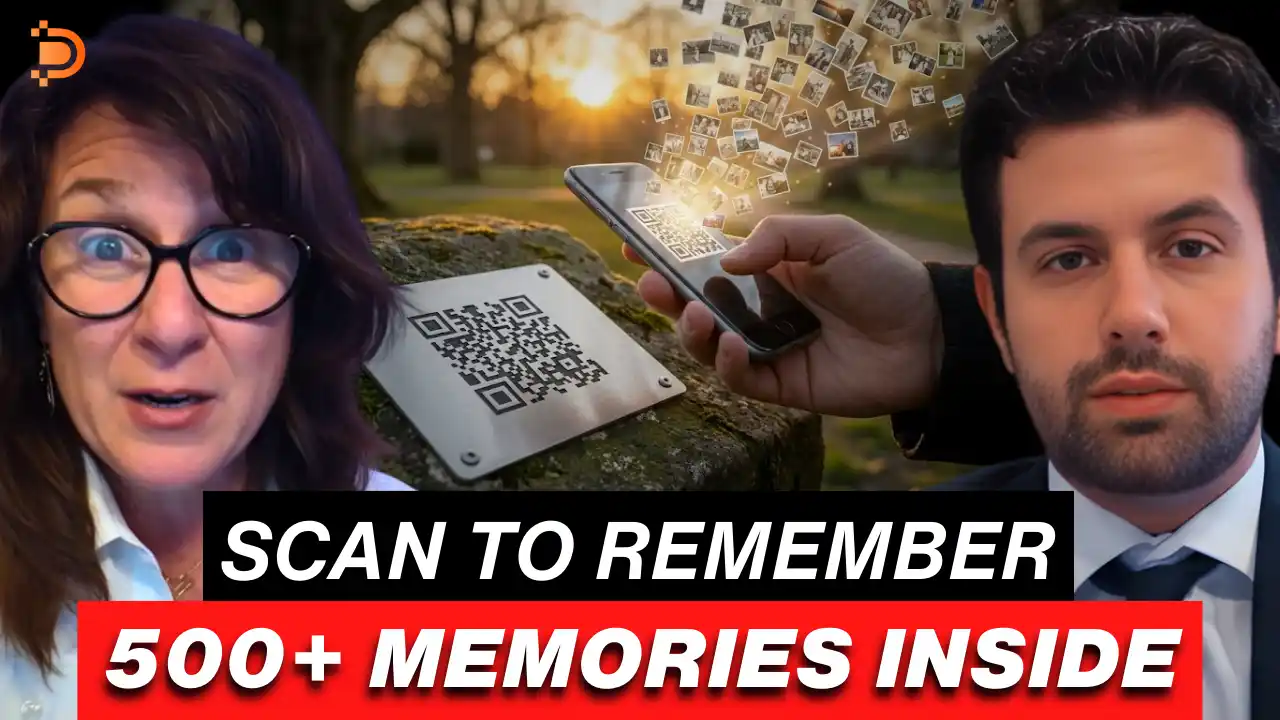
One QR Code, 500+ Photos The New Tech You Need for Legacy | Cameron Labrecque

What happens when a lifetime of digital memories—thousands of photos, videos, and stories—is scattered across social media and hidden in locked phones? In this episode of The Digital Legacy Podcast, host Niki Weiss, Digital Thanatologist, sits down with Cameron Labrecque, the 24-year-old CEO of Rememery. They discuss how a single Christmas gift (a cardinal snow globe) sparked a mission to fix the "problem of preservation" and how technology can turn a static obituary into a living, interactive narrative of a life well-lived. You’ll discover: Why cardinals are the universal medium for connecting with lost loved ones and how they inspired the Rememery brand. How to move from a physical box of photos to a digital legacy site with over 500+ memories accessible to your entire family. How a simple 2x2 QR code on a headstone can turn a cemetery visit into an experiential journey through a person’s life. How families can curate and protect a loved one’s story by approving which photos and videos are made public. Why you should think twice before using AI to "recreate" a deceased loved one’s likeness without their prior terms-and-conditions consent. Why you should never be mad at the friend who is always taking pictures—you’ll be thanking them in 10 years. Because your legacy isn't just about being remembered—it's about how your story is told for the next 100 years

0:00
0:00
Advertising will end in
play_arrow
pause
replay_10
forward_10
volume_up
volume_down
volume_off
share
speed
Skip ad
close
close
close
close
close

Description:

What happens when a lifetime of digital memories—thousands of photos, videos, and stories—is scattered across social media and hidden in locked phones?

In this episode of The Digital Legacy Podcast, host Niki Weiss, Digital Thanatologist, sits down with Cameron Labrecque, the 24-year-old CEO of Rememery. They discuss how a single Christmas gift (a cardinal snow globe) sparked a mission to fix the "problem of preservation" and how technology can turn a static obituary into a living, interactive narrative of a life well-lived.

You’ll discover:

  • Why cardinals are the universal medium for connecting with lost loved ones and how they inspired the Rememery brand.

  • How to move from a physical box of photos to a digital legacy site with over 500+ memories accessible to your entire family.

  • How a simple 2x2 QR code on a headstone can turn a cemetery visit into an experiential journey through a person’s life.

  • How families can curate and protect a loved one’s story by approving which photos and videos are made public.

  • Why you should think twice before using AI to "recreate" a deceased loved one’s likeness without their prior terms-and-conditions consent.

  • Why you should never be mad at the friend who is always taking pictures—you’ll be thanking them in 10 years.

Because your legacy isn't just about being remembered—it's about how your story is told for the next 100 years



Related Podcast

The Tech That's Revolutionizing the Death Space | Virtual Autopsy PT 1 | Ash Govind

What happens when the ancient practice of the scalpel meets the future of digital imaging? In this part 1 of exploring Virtual Autopsy in the The Digital Legacy Podcast, host Niki Weiss, Digital Thanatologist, sits down with Ash Govind from Virtual Autopsy UK. They discuss how they are "turbocharging" 30-year-old radiological technology to replace the knife with a CT scanner, providing a dignified, non-invasive alternative for families and faith groups worldwide. You’ll discover: How virtual autopsy uses CT data to "Xerox the deceased," allowing radiologists to analyze every 1mm slice of the remains without a single incision. Why this technology is a vital "must-have" for Jewish and Muslim faith groups, whose religious laws require speedy burials and prohibit the interference of remains. How avoiding traditional "Y" and "I" incisions prevents the emotional trauma and scars families face when viewing a loved one at a funeral. Why digital post-mortem data is superior to physical evidence, as it can be transported to world experts for review long after the body has been laid to rest. In 93% of cases, a virtual autopsy is enough to conclude the probable cause of death without any invasive intervention. How virtual autopsies are revolutionizing the investigation of service members killed in conflict, providing a list of injuries while honoring the dignity of those who fought for their country. Because as Ash Govind says, "Dignity and respect in death is important—this is not just a scientific benefit, it is a humanitarian mission."

Listen Now
The Unspoken Trauma of Managing a Terminal Child's Care | Morgan Motsinger

What happens to your mind when you watch your child lose every skill they ever learned—from walking and talking to the simple act of eating—over a decade-long "absolute train" of a degenerative disease? In this deeply moving episode of The Digital Legacy Podcast, host Niki Weiss, Digital Thanatologist, sits down with Morgan Motsinger, host of the P.S. We Expire podcast. Morgan shares the raw reality of raising her daughter, Annie, who was diagnosed with a rare genetic illness at age three and passed away in 2022. You’ll discover: How knowing life is finite forces a radical, intentional choice in education, relationships, and how we spend our minutes. The biological reason Morgan's brain stayed in fight-or-flight mode for months after her daughter’s death. A raw reaction to new technology that uses AI to replicate the persona of deceased loved ones—and why it might impair our real memories. Why Morgan captured "unsharable" close-ups—like a dimple in an ear—to preserve the physical proximity of motherhood. Why "self-care" isn't about bubble baths, but about the radical act of knowing your needs and stopping the "energy leaks". How activities like "mindful cooking" or walking can help rewire a brain stuck in the trauma of anticipatory grief. Because grief isn't an "either/or"—it’s a complex landscape of profound joy and deep clarity, even in the moments of actively dying.

Listen Now

Comments