
Why Your Social Media Profile Might Outlive You | Gina Cui, Ph.D.
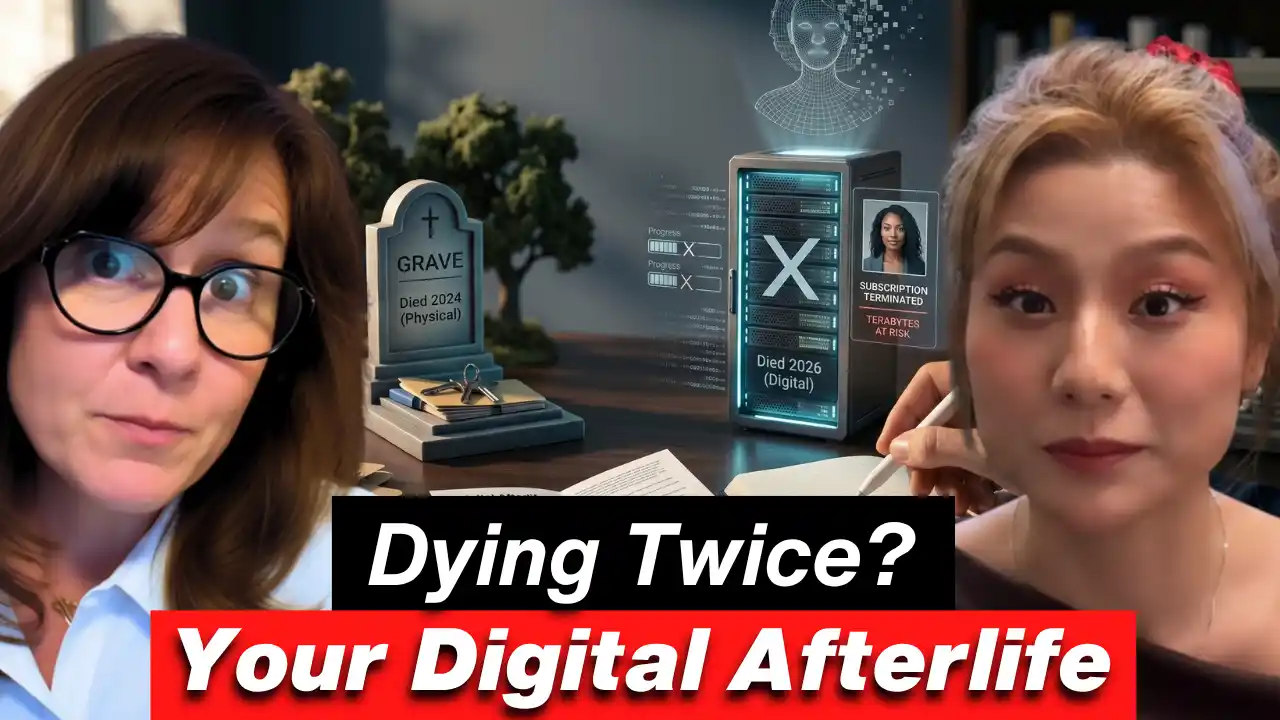
What happens when you pass away, but your social media accounts keep liking, sharing, and commenting on posts? In this thought-provoking episode of The Digital Legacy Podcast, host Niki Weiss, Digital Thanatologist, sits down with Professor Gina Cui, a marketing and consumer behavior expert from Coastal Carolina University. Together, they explore the intersection of marketing, AI, and mortality, diving deep into the billion-dollar "death tech" industry that profits from humanity's most vulnerable state. From the ethics of generating AI clones of the deceased to navigating the murky waters of data ownership, this episode challenges everything we know about what it means to leave a legacy in the modern era. You’ll discover: The Meta "Ghost" Patent: How Meta recently secured a patent allowing simulated deceased users to continue engaging with content online. By 2037, it is estimated that dead users will outnumber the living on the platform. Archival vs. Generative Immortality: The stark difference between simply revisiting old photos (archival) and using Large Language Models to create active, simulated "clones" of your loved ones (generative). The 300+ Account Burden: Why the average adult's massive digital footprint of over 300 accounts requires proactive planning to avoid a post-mortem mess. The Terms of Service Trap: Why ignoring the fine print matters—platform consent agreements can legally override your will if you haven't explicitly planned for your digital assets. The "Dying Twice" Dilemma: While a recent Nature study showed grief bots can relieve the emotional burden on living friends , clinical psychologists warn that ending an AI subscription could force grieving families to endure losing their loved one all over again. Who Owns Your Likeness? The terrifying legal gray area surrounding data ownership and whether tech giants will monetize your digital afterlife. Because as Professor Cui notes, awareness and a simple conversation are the most powerful tools we have to navigate this fascinating—and horrifying—digital journey.
Description:
What happens when you pass away, but your social media accounts keep liking, sharing, and commenting on posts?
In this thought-provoking episode of The Digital Legacy Podcast, host Niki Weiss, Digital Thanatologist, sits down with Professor Gina Cui, a marketing and consumer behavior expert from Coastal Carolina University. Together, they explore the intersection of marketing, AI, and mortality, diving deep into the billion-dollar "death tech" industry that profits from humanity's most vulnerable state.
From the ethics of generating AI clones of the deceased to navigating the murky waters of data ownership, this episode challenges everything we know about what it means to leave a legacy in the modern era.
You’ll discover:
The Meta "Ghost" Patent: How Meta recently secured a patent allowing simulated deceased users to continue engaging with content online. By 2037, it is estimated that dead users will outnumber the living on the platform.
Archival vs. Generative Immortality: The stark difference between simply revisiting old photos (archival) and using Large Language Models to create active, simulated "clones" of your loved ones (generative).
The 300+ Account Burden: Why the average adult's massive digital footprint of over 300 accounts requires proactive planning to avoid a post-mortem mess.
The Terms of Service Trap: Why ignoring the fine print matters—platform consent agreements can legally override your will if you haven't explicitly planned for your digital assets.
The "Dying Twice" Dilemma: While a recent Nature study showed grief bots can relieve the emotional burden on living friends , clinical psychologists warn that ending an AI subscription could force grieving families to endure losing their loved one all over again.
Who Owns Your Likeness? The terrifying legal gray area surrounding data ownership and whether tech giants will monetize your digital afterlife.
Because as Professor Cui notes, awareness and a simple conversation are the most powerful tools we have to navigate this fascinating—and horrifying—digital journey.


Comments