
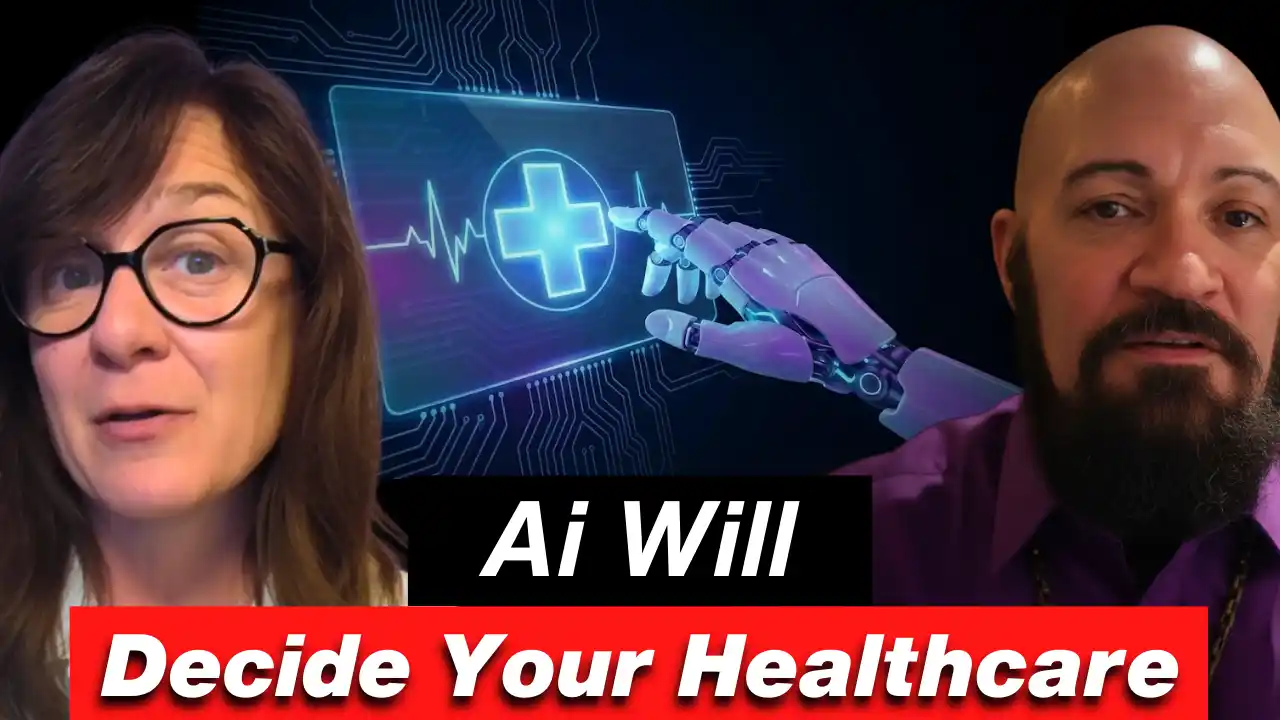
Will AI Decide When You Die? The Ethics of "Algorithmic Healthcare" | Brian M. Green
What happens when your doctor relies on an AI to listen to you—or worse, when an algorithm decides if you are "economically viable" enough for life support? In this episode of The Digital Legacy Podcast, host Niki Weiss, Digital Thanatologist, sits down with Brian M. Green, an expert in AI governance and responsibility, to unpack the "empathy trap" of artificial intelligence and why the healthcare industry is deploying technology faster than it can create the ethics to control it. You’ll discover: Why patients are increasingly feeling gaslighted by doctors and turning to AI chatbots for the "mirroring" empathy they crave The rise of "Ambient Listening" in exam rooms and why your doctor is recording you to save the hospital money, not to improve your care Why AI development is currently a "luxury plane without landing gear"—moving fast with zero safety regulations The terrifying potential for AI to make autonomous economic decisions regarding organ transplants and pulling the plug on life support Why we cannot wait for government regulation and need "governance first" frameworks immediately The critical need for "AI Literacy" so you stop treating chatbots as spiritual guides or trained clinicians Because AI can simulate compassion, but it can never witness your suffering, and it should never hold the power to decide your fate.
Description:
What happens when your doctor relies on an AI to listen to you—or worse, when an algorithm decides if you are "economically viable" enough for life support?
In this episode of The Digital Legacy Podcast, host Niki Weiss, Digital Thanatologist, sits down with Brian M. Green, an expert in AI governance and responsibility, to unpack the "empathy trap" of artificial intelligence and why the healthcare industry is deploying technology faster than it can create the ethics to control it.
You’ll discover:
Why patients are increasingly feeling gaslighted by doctors and turning to AI chatbots for the "mirroring" empathy they crave
The rise of "Ambient Listening" in exam rooms and why your doctor is recording you to save the hospital money, not to improve your care
Why AI development is currently a "luxury plane without landing gear"—moving fast with zero safety regulations
The terrifying potential for AI to make autonomous economic decisions regarding organ transplants and pulling the plug on life support
Why we cannot wait for government regulation and need "governance first" frameworks immediately
The critical need for "AI Literacy" so you stop treating chatbots as spiritual guides or trained clinicians
Because AI can simulate compassion, but it can never witness your suffering, and it should never hold the power to decide your fate.




Comments