
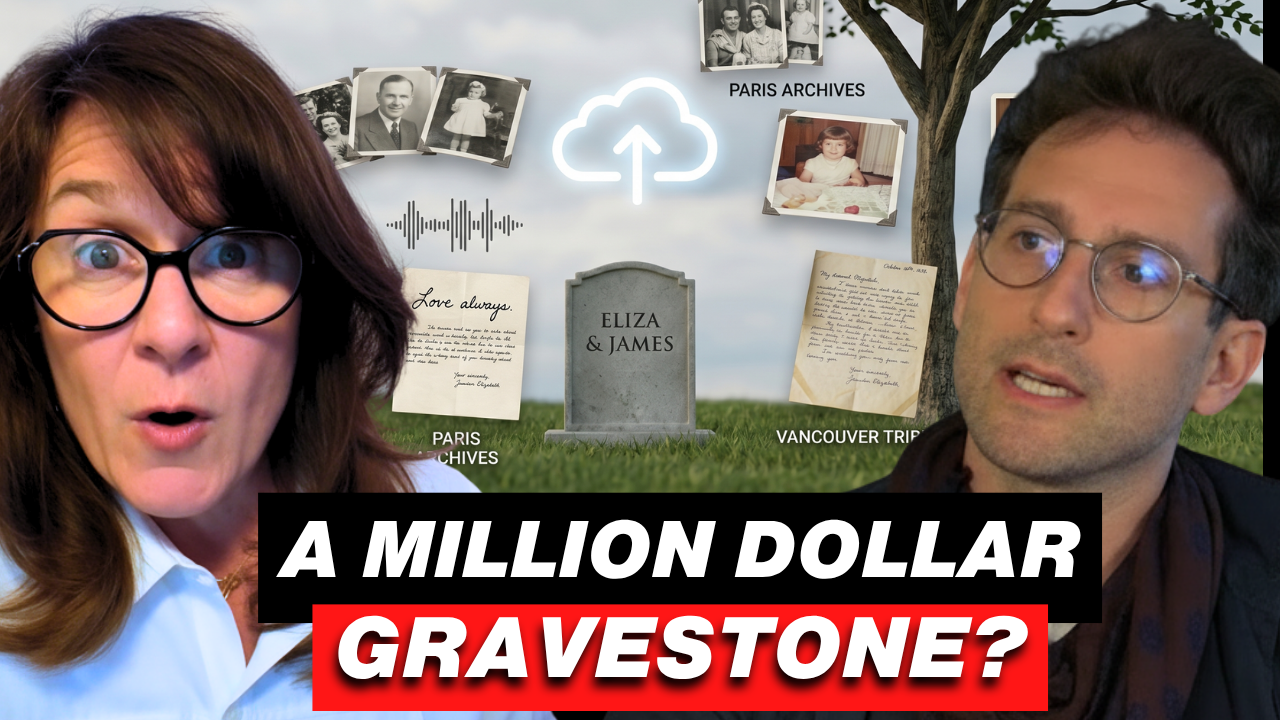
Designing a Digital Tomb: Architect Built Cumulus to Save His Family’s Legacy | Alexander Josephson
When an architect’s father is given a terminal diagnosis, what does he build? For Alexander Josephson, the answer wasn't a physical mausoleum—it was a digital one. In this episode of the Digital Legacy Podcast, Niki Weiss sits down with Alex, the founder of Cumulus, to discuss the deeply personal journey that led him from designing award-winning brick-and-mortar buildings to creating a 3D digital sanctuary for our memories. Alex shares the story of his father's multiple close brushes with death and the heavy burden that falls on the "chosen one" in every family to manage end-of-life arrangements. They discuss why our modern, scrolling social media feeds are inadequate for true legacy preservation and how Cumulus allows families to collaborate and build a "tomb of their memories" in the cloud. In this episode, we discuss: Why the world's most famous architecture (like the Pyramids and the Taj Mahal) are actually tombs. The psychological burden placed on the family member tasked with estate and legacy planning. The difference between a self-storage facility (like Google Drive) and a purpose-built digital memorial. How Cumulus uses 3D and VR components to create an immersive, sanctuary-like experience for families. The financial reality of physical cemetery plots versus digital perpetuity.
Description:
When an architect’s father is given a terminal diagnosis, what does he build? For Alexander Josephson, the answer wasn't a physical mausoleum—it was a digital one. In this episode of the Digital Legacy Podcast, Niki Weiss sits down with Alex, the founder of Cumulus, to discuss the deeply personal journey that led him from designing award-winning brick-and-mortar buildings to creating a 3D digital sanctuary for our memories.
Alex shares the story of his father's multiple close brushes with death and the heavy burden that falls on the "chosen one" in every family to manage end-of-life arrangements. They discuss why our modern, scrolling social media feeds are inadequate for true legacy preservation and how Cumulus allows families to collaborate and build a "tomb of their memories" in the cloud.
In this episode, we discuss:
Why the world's most famous architecture (like the Pyramids and the Taj Mahal) are actually tombs.
The psychological burden placed on the family member tasked with estate and legacy planning.
The difference between a self-storage facility (like Google Drive) and a purpose-built digital memorial.
How Cumulus uses 3D and VR components to create an immersive, sanctuary-like experience for families.
The financial reality of physical cemetery plots versus digital perpetuity.




Comments