
Capturing the Moments That Matter: How Kinnect is Redefining Legacy
It is an uncomfortable truth, but life is fragile and unpredictable. We often spend our days focused on the immediate future, rarely stopping to think about the legacy we are building right now. Yet, when a loved one receives a difficult diagnosis, or when we face our own mortality, our perspective shifts instantly. We realize that the most valuable things we leave behind are not just financial assets or legal documents, but our memories, our stories, and the essence of who we are. Recently, Niki Weiss sat down with Omar Alvarez on the Digital Legacy Podcast to explore this very human experience. Omar is the founder of Kinnect, a new platform designed to help families capture and preserve their stories in a safe, private space. His journey to creating Kinnect is deeply personal, born from a lifelong awareness of life's fleeting nature. A Mission Born from Love and Loss Omar’s dedication to preserving family history began when he was just a child in the fifth grade. His grandfather, a beloved figure who spent summers with his family, was diagnosed with dementia. Watching a vibrant, deeply admired family member slowly fade was a profoundly painful experience. At that young age, Omar realized that memories could be lost. He asked his parents if he, too, could develop dementia. When they honestly answered "yes," a powerful seed was planted. He felt an immediate, urgent need to start saving the pieces of his life. Years later, while building a successful career in marketing, Omar experienced another devastating loss. A close friend was diagnosed with terminal cancer and passed away at only 31 years old. This tragedy solidified his mission. He realized there was a massive lack of resources to help people intentionally capture their life stories while they are still here, and an equally massive lack of support for the friends and family left behind.
About This Blog
It is an uncomfortable truth, but life is fragile and unpredictable. We often spend our days focused on the immediate future, rarely stopping to think about the legacy we are building right now. Yet, when a loved one receives a difficult diagnosis, or when we face our own mortality, our perspective shifts instantly. We realize that the most valuable things we leave behind are not just financial assets or legal documents, but our memories, our stories, and the essence of who we are.
Recently, Niki Weiss sat down with Omar Alvarez on the Digital Legacy Podcast to explore this very human experience. Omar is the founder of Kinnect, a new platform designed to help families capture and preserve their stories in a safe, private space. His journey to creating Kinnect is deeply personal, born from a lifelong awareness of life's fleeting nature.
A Mission Born from Love and Loss
Omar’s dedication to preserving family history began when he was just a child in the fifth grade. His grandfather, a beloved figure who spent summers with his family, was diagnosed with dementia. Watching a vibrant, deeply admired family member slowly fade was a profoundly painful experience.
At that young age, Omar realized that memories could be lost. He asked his parents if he, too, could develop dementia. When they honestly answered "yes," a powerful seed was planted. He felt an immediate, urgent need to start saving the pieces of his life.
Years later, while building a successful career in marketing, Omar experienced another devastating loss. A close friend was diagnosed with terminal cancer and passed away at only 31 years old. This tragedy solidified his mission. He realized there was a massive lack of resources to help people intentionally capture their life stories while they are still here, and an equally massive lack of support for the friends and family left behind.
The Problem with Modern Memories
Today, the way we document our lives is highly fragmented. We have photos scattered across old hard drives, thoughts shared on public social media, and vital legal documents locked away in filing cabinets. We are the first generation to die with more digital assets than physical ones, yet we lack a centralized, meaningful way to pass those digital assets on.
Furthermore, traditional social media platforms are rarely designed for genuine family connection. They are built to capture our attention through algorithms and advertisements, not to preserve our most vulnerable reflections for our great-grandchildren.
A Private Space for Meaningful Connection
This is exactly why Omar built Kinnect. It is designed as an all-in-one hub for families to engage, reflect, and build a lasting legacy without the noise of traditional social media.
Privacy is the foundational core of the platform. There are no ads, no bots, and no public search bars. Users must be explicitly invited via a private URL to join a specific family group. This creates a safe, intimate environment where users feel comfortable being truly vulnerable and authentic.
How Kinnect Works: Daily Echoes and the Octopus Feature
Once inside a private group, Kinnect gently encourages connection. The platform uses a feature called "Echo" to send out one thoughtful question each day. These are not generic prompts; they are tailored to prompt meaningful reflection about your life, your history, and your values. Users can respond with text, voice, or video, essentially creating a long-form, interactive interview of their life over time.
Omar also recently introduced a feature internally called "Octopus." This tool acts as a gentle, utility-based check-in. It helps families stay organized and connected by asking task-based questions, like reminding you of a birthday or prompting a young adult to ask their mother about her favorite childhood songs. It seamlessly turns the simple act of checking in into the powerful act of archiving a family's history.
A Global Perspective on Legacy
When we think of legacy in the Western world, we often focus strictly on legal documents like wills and trusts. While Kinnect is partnering with estate planning companies to house those vital records, Omar recognizes that legacy means much more.
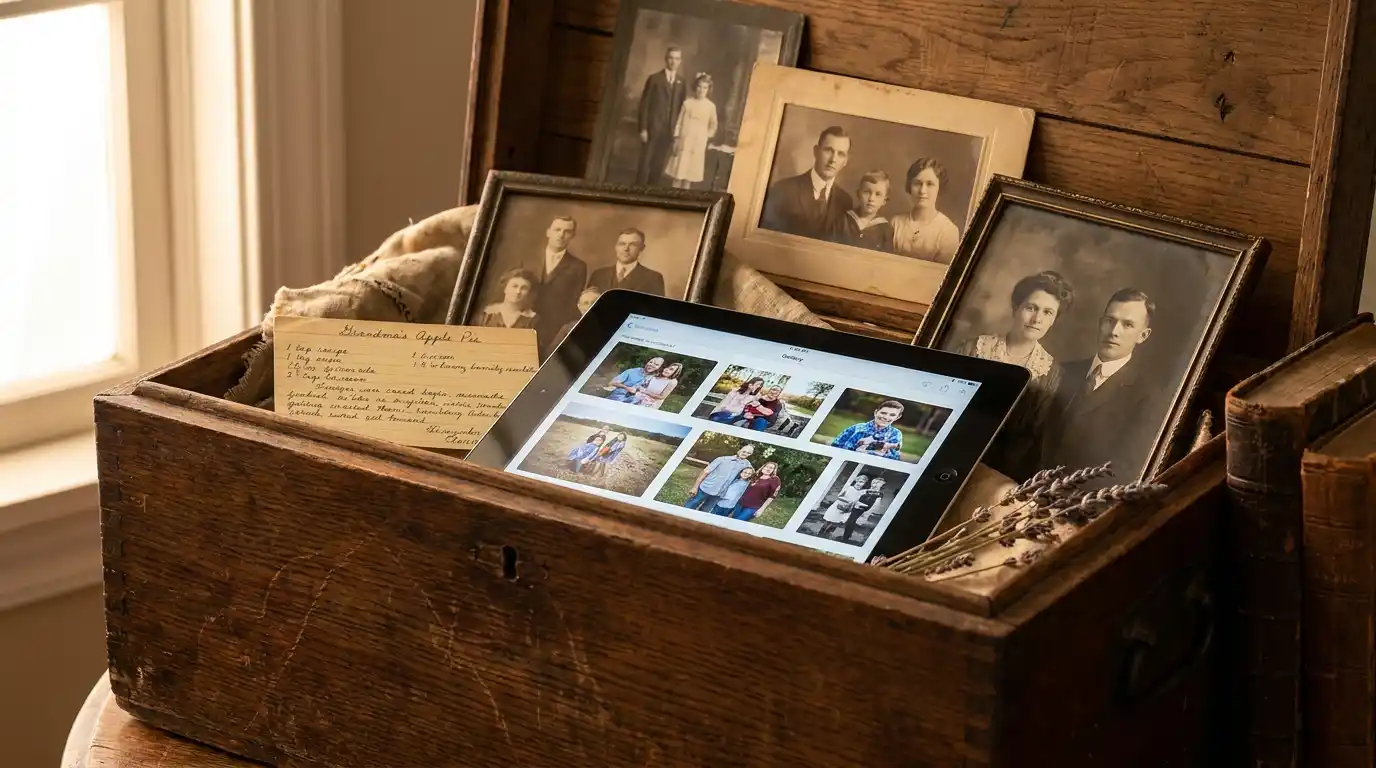
For many cultures globally, legacy is about the stories, the generations of family recipes, and the shared history that explains why a family is the way they are. Kinnect is designed to capture this holistic view of a life. It moves beyond the sterile dots on a traditional genealogy chart and fills the family tree with real voices, real insights, and real love.
Reflecting on Your Own Legacy
We cannot guarantee how long our digital platforms will survive, and we certainly cannot predict the length of our own lives. However, we can choose to be intentional about what we document today.
Omar encourages everyone to pause and define what legacy truly means to them. Consider taking these small steps to protect your story:
Identify Your Treasures: Decide what matters most. Is it a collection of family recipes, a journal of personal reflections, or ensuring your legal documents are accessible?
Consolidate Your Digital Footprint: Begin gathering your digital assets and consider how you want them managed. Tools like Kinnect offer a secure place to start housing these memories.
Embrace the Present: While planning for the future is vital, do not forget to appreciate the gift of being alive today. Finding joy in the present moment is the most beautiful legacy you can create.
Take the Next Step: Start Planning with My Final Playbook


Related Blog
Duis mi velit, auctor vitae leo a, luctus congue dolor. Nullam at velit quis tortor malesuada ultrices vitae vitae lacus. Curabitur tortor purus, tempor in dignissim eget, convallis in lorem.


Comments