
How a Snow Globe Sparked a Revolution in Remembering
We often think we have all the time in the world to ask the questions we want to ask. We think we have endless tomorrows to organize the old family albums or back up the photos on our phones. But life has a way of moving faster than we expect. When a loved one passes away, the silence they leave behind is often filled with a frantic search for memories. We scramble to find that one good photo for the obituary or the video of their laugh from three Christmases ago. It is a heavy, overwhelming task during a time when simply getting out of bed feels like a victory. But what if the way we remember could be different? What if it could be a collective celebration rather than a solitary struggle? I recently sat down with Cameron Labrecque, the 24-year-old founder of Rememery, on the Digital Legacy Podcast. We talked about bridging the gap between physical grief and digital memory, and why preserving a life story is one of the most important things we can do.
About This Blog
We often think we have all the time in the world to ask the questions we want to ask. We think we have endless tomorrows to organize the old family albums or back up the photos on our phones. But life has a way of moving faster than we expect. When a loved one passes away, the silence they leave behind is often filled with a frantic search for memories. We scramble to find that one good photo for the obituary or the video of their laugh from three Christmases ago.
It is a heavy, overwhelming task during a time when simply getting out of bed feels like a victory. But what if the way we remember could be different? What if it could be a collective celebration rather than a solitary struggle? I recently sat down with Cameron Labrecque, the 24-year-old founder of Rememery, on the Digital Legacy Podcast. We talked about bridging the gap between physical grief and digital memory, and why preserving a life story is one of the most important things we can do.
A Message in a Snow Globe
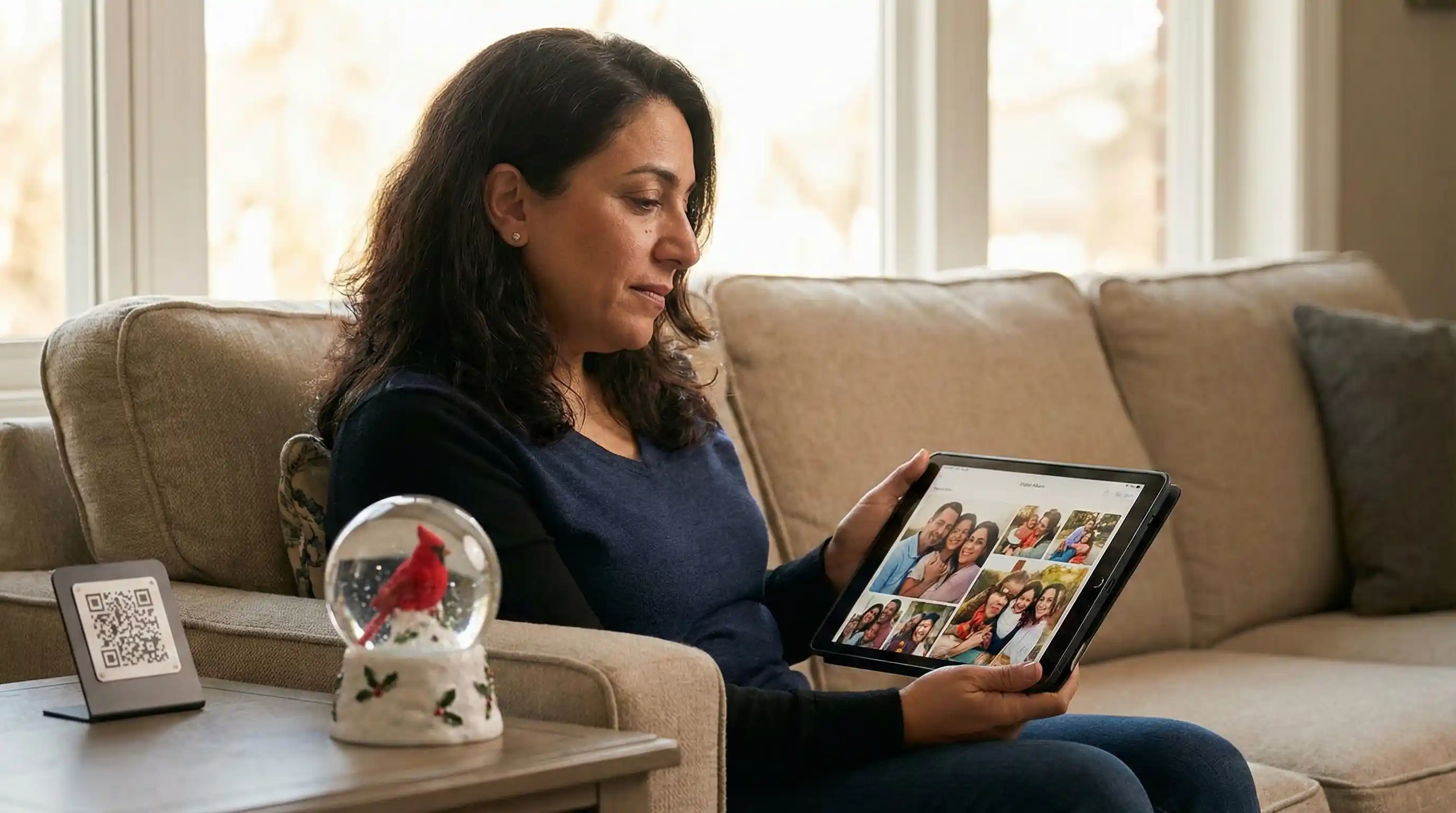
Cameron’s journey into the world of "death tech" did not start in a boardroom. It started in his living room on Christmas morning. Five years ago, his grandmother gave his mother a snow globe with a red cardinal in the center. Attached to it was a simple note that read, "Remember Me".
That moment brought his mother to tears and sparked a realization in Cameron. He realized that we need a better way to preserve the essence of the people we love before they are gone . He saw that while his grandmother was still vibrant and alive, the fear of forgetting her was already present. This inspired him to build a tool that would ensure no story goes untold and no memory gets lost in the digital shuffle.
The Problem with "Later"
One of the hardest truths Cameron shared is that many people do not think about legacy until it is too late. He initially wanted to create a platform for "life logging," where people would document their lives in real-time . But he quickly learned that most of us are too busy living to think about dying.
The reality is that we often wait until a crisis to gather our memories . This is why Rememery shifted its focus to help families at the exact moment of need, often partnering with funeral homes to lift the burden of gathering photos and videos for services . It acknowledges that while we might avoid the topic of death, we all crave connection when loss happens.
Discovering the Hidden Stories
Cameron experienced the power of his own creation firsthand when his grandfather recently passed away. In the midst of his grief, his platform allowed his family to gather over 550 photos and videos in one place. These were not just the stiff, formal portraits we are used to seeing. They were candid moments, videos from cousins, and snapshots from neighbors.
He described finding a photo of his grandfather from the 1940s standing with his 12 siblings. It was a glimpse into a past that Cameron had never fully seen. By centralizing these digital assets, the funeral became more than just a goodbye. It became a discovery. Family members were texting in the group chat, sharing stories sparked by images they didn't know existed.
Connecting the Physical and Digital
One of the most innovative aspects of modern remembrance is how we are starting to merge our physical rituals with our digital lives. Cameron introduced the concept of a QR code plaque that can be placed directly on a headstone. Imagine walking through a cemetery and seeing a name and a date, but knowing nothing about the person resting there.
Now, imagine scanning a small code and instantly being transported into their world. You could see their smile, hear their voice, and read the stories shared by those who loved them. This technology ensures that a person is not just a name carved in stone. They remain a vibrant, three-dimensional human being whose legacy can be accessed and appreciated by future generations.
The "Like" Button of Grief
As we embrace these new tools, Cameron offered a wise word of caution regarding Artificial Intelligence. We are seeing a rise in "digital twins" and AI avatars that promise to let us talk to our deceased loved ones. While the concept might sound comforting, we have to consider the ethics.
Cameron urged us to ask: Would Grandma have signed the terms and conditions for this? Did she consent to having her voice and likeness used in this way? Just as social media introduced anxiety and comparison into our lives, unregulated AI in the grief space has the potential to cause harm if we are not careful . Technology should support our grieving process, not replace the reality of our loss.
Don't Hate the Photographer
If there is one small step you can take today, let it be this: take the picture. Cameron shared a story about his mother, who was always the one with the camera. She was the neighbor known for snapping photos while the kids were playing, often to the annoyance of those around her .
But when his grandfather was on his deathbed, he looked at Cameron's mom and thanked her. He realized that her "annoying" habit had preserved the visual history of his life. You never know which photo will be the one that ends up in the obituary. You never know which video will be the only recording you have of a loved one's laugh.
So, be the person who documents the mundane moments. Organize your digital files. Ask the questions now. Your legacy is everything. It is the footprint you leave on the hearts of others, and thanks to technology, it is something we can keep vibrant forever.
To hear Cameron Labrecque’s full conversation with Niki Weiss, listen to the latest episode of the Digital Legacy Podcast. You can also explore his platform at Rememery.com.
Take the Next Step: Start Planning with My Final Playbook


Related Blog
Duis mi velit, auctor vitae leo a, luctus congue dolor. Nullam at velit quis tortor malesuada ultrices vitae vitae lacus. Curabitur tortor purus, tempor in dignissim eget, convallis in lorem.



Comments