
Navigating the Digital Afterlife: How AI Is Reshaping Grief and Why Digital Resilience Matters Now
Most of us avoid thinking about the end-of-life. It feels heavy, and we are already carrying enough between aging parents, kids, careers, and our own daily survival. But here is the truth I keep coming back to: leaving your digital footprint to chance is no longer safe. We are the first generation that will die with more digital assets than physical ones. Thousands of photos in the cloud. Banking. Subscriptions. Social media. Decades of digital identity. None of it disappears when we do. Building digital resilience is no longer optional. It is a core act of care for the people we love. I recently sat down with Dr. Gina Cui on the Digital Legacy Podcast to dig into exactly this. Dr. Cui is an Assistant Professor of Marketing at Coastal Carolina University, and her academic work focuses on consumer behavior in digital spaces and AI. What she shared changed how I think about digital resilience, and I want to walk you through it. The Death Tech Industry Is Already a Billion-Dollar Market Death Tech is no longer a ‘niche’ market. Companies are actively building business models that profit from one of the most vulnerable emotional states a human can experience: the loss of someone we love. Dr. Cui breaks digital immortality into two distinct categories. Archival AI uses your existing photos, videos, and memories to help loved ones revisit the past. Think of it as an interactive scrapbook. Generative AI is different. It uses large language models to simulate a digital clone of someone who has passed away. It generates new responses. It carries on conversations. It feels, to the grieving family, like the person never left. These are very different products, and they raise very different ethical questions for your digital legacy. When Social Media Outlives the Living In December 2025, Meta secured a patent that allows their AI to simulate deceased users. A digital version of your loved one could continue to like, share, and comment on social posts long after they are physically gone. This is uncharted ground. Experts now predict that by 2037, there will be more ‘ghost’ of dead users Meta accounts than living ones. Pause on that. The platform will become a digital cemetery with active simulated residents. This forces a hard question: who actually owns your data, and who decides what happens to your digital identity after you die? The Double-Edged Sword of Grief Bots Some of this technology produces genuinely beautiful moments. Dr. Cui pointed me to the South Korean documentary "Missing You," produced in collaboration with Story File. In it, immersive virtual reality allowed a grieving mother to "hug" her late seven-year-old daughter one last time. It was a profound moment of healing. There is also early research suggesting upside. A study published in Nature, with a small sample of ten participants, found that interacting with AI grief bots can temporarily relieve the emotional burden grieving people place on friends and family. It gives sorrow somewhere to go. But commercializing grief introduces serious ethical problems. Most digital afterlife services run on subscriptions. What happens when the family can no longer afford the monthly fee? Cancelling the subscription does not feel like ending a service. It feels like losing the person all over again. A second death. Internal vs External Continuation Bonds Here is where Dr. Cui's framework gets really useful. In psychology, we talk about "continuation bonds." These are the ways the living stay connected to the people they have lost. An internal continuation bond is the natural human experience of feeling someone's presence after they are gone. You walk through the door and almost call out their name. You see their handwriting on a note and feel them in the room. The bond lives inside you. An external continuation bond is what new technology is creating. Now you can actually talk to a digital version of the deceased. They respond. They carry on conversations. The bond lives outside of you, on a server, inside a subscription, packaged as a product. This shift matters. We do not yet know what external continuation bonds do to long-term grief, mental health, or healing. We are running this experiment in real time, on real grieving families, without guardrails. Building digital resilience means making conscious choices about which bonds you want to leave behind, and which you do not.
About This Blog
Most of us avoid thinking about the end-of-life. It feels heavy, and we are already carrying enough between aging parents, kids, careers, and our own daily survival. But here is the truth I keep coming back to: leaving your digital footprint to chance is no longer safe.
We are the first generation that will die with more digital assets than physical ones. Thousands of photos in the cloud. Banking. Subscriptions. Social media. Decades of digital identity. None of it disappears when we do.
Building digital resilience is no longer optional. It is a core act of care for the people we love.
I recently sat down with Dr. Gina Cui on the Digital Legacy Podcast to dig into exactly this. Dr. Cui is an Assistant Professor of Marketing at Coastal Carolina University, and her academic work focuses on consumer behavior in digital spaces and AI. What she shared changed how I think about digital resilience, and I want to walk you through it.
The Death Tech Industry Is Already a Billion-Dollar Market
Death Tech is no longer a ‘niche’ market. Companies are actively building business models that profit from one of the most vulnerable emotional states a human can experience: the loss of someone we love.
Dr. Cui breaks digital immortality into two distinct categories.
Archival AI uses your existing photos, videos, and memories to help loved ones revisit the past. Think of it as an interactive scrapbook.
Generative AI is different. It uses large language models to simulate a digital clone of someone who has passed away. It generates new responses. It carries on conversations. It feels, to the grieving family, like the person never left.
These are very different products, and they raise very different ethical questions for your digital legacy.
When Social Media Outlives the Living
In December 2025, Meta secured a patent that allows their AI to simulate deceased users. A digital version of your loved one could continue to like, share, and comment on social posts long after they are physically gone.
This is uncharted ground.
Experts now predict that by 2037, there will be more ‘ghost’ of dead users Meta accounts than living ones. Pause on that. The platform will become a digital cemetery with active simulated residents.
This forces a hard question: who actually owns your data, and who decides what happens to your digital identity after you die?
The Double-Edged Sword of Grief Bots
Some of this technology produces genuinely beautiful moments.
Dr. Cui pointed me to the South Korean documentary "Missing You," produced in collaboration with Story File. In it, immersive virtual reality allowed a grieving mother to "hug" her late seven-year-old daughter one last time. It was a profound moment of healing.
There is also early research suggesting upside. A study published in Nature, with a small sample of ten participants, found that interacting with AI grief bots can temporarily relieve the emotional burden grieving people place on friends and family. It gives sorrow somewhere to go.
But commercializing grief introduces serious ethical problems.
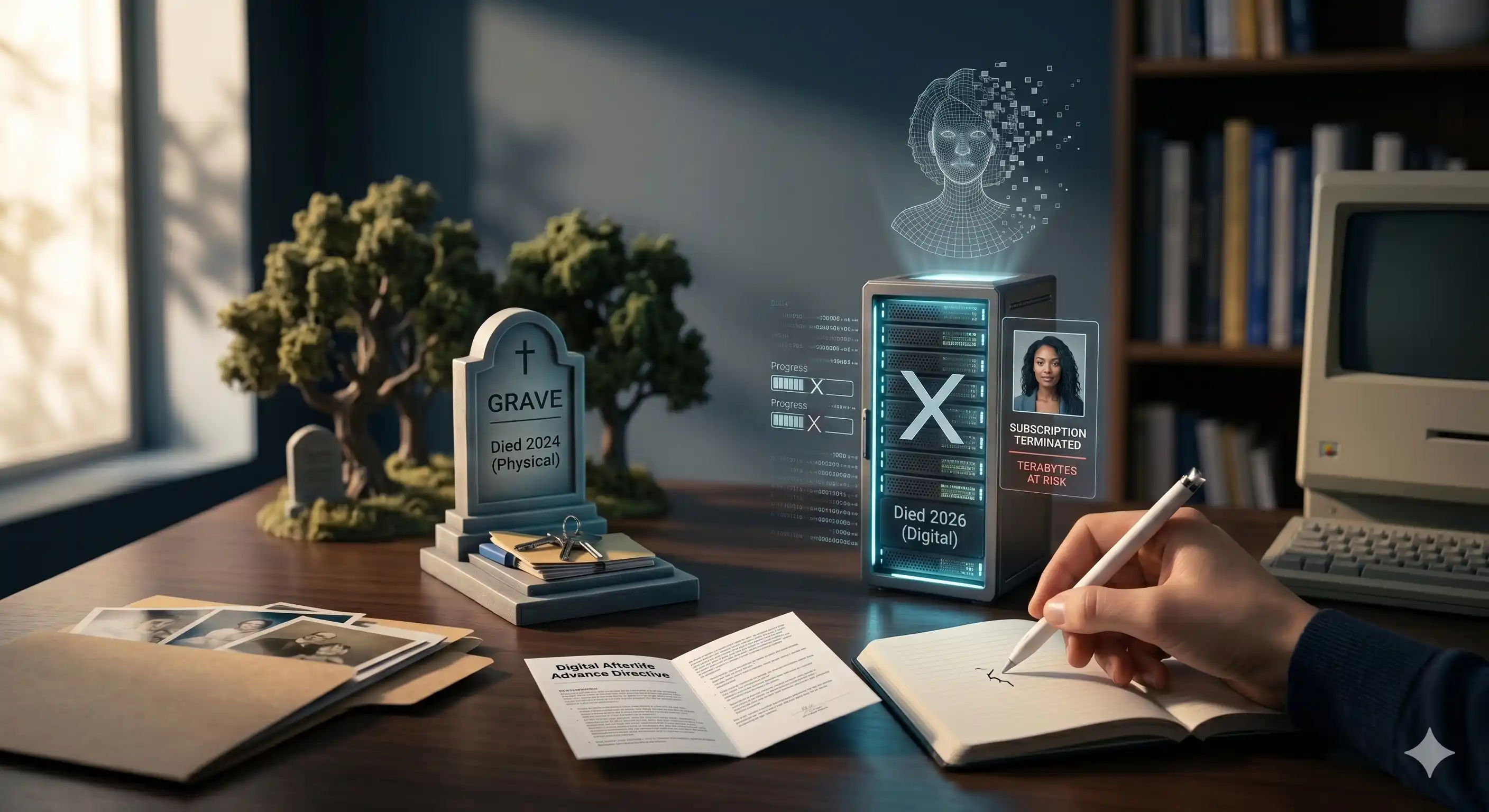
Most digital afterlife services run on subscriptions. What happens when the family can no longer afford the monthly fee? Cancelling the subscription does not feel like ending a service. It feels like losing the person all over again. A second death.
Internal vs External Continuation Bonds
Here is where Dr. Cui's framework gets really useful.
In psychology, we talk about "continuation bonds." These are the ways the living stay connected to the people they have lost.
An internal continuation bond is the natural human experience of feeling someone's presence after they are gone. You walk through the door and almost call out their name. You see their handwriting on a note and feel them in the room. The bond lives inside you.
An external continuation bond is what new technology is creating. Now you can actually talk to a digital version of the deceased. They respond. They carry on conversations. The bond lives outside of you, on a server, inside a subscription, packaged as a product.
This shift matters. We do not yet know what external continuation bonds do to long-term grief, mental health, or healing. We are running this experiment in real time, on real grieving families, without guardrails. Building digital resilience means making conscious choices about which bonds you want to leave behind, and which you do not.
Your Right to a Digital DNR
The average adult now manages more than 300 digital accounts. Imagine a grieving family member trying to track down utility passwords while planning a funeral.
If you do not establish a clear plan, the tech platform's terms and conditions automatically take priority over your wishes. Most people skip past those terms when they sign up. Your will does not override them unless you explicitly say so.
This is why I recommend every adult build out the equivalent of a Digital DNR.
In medicine, a DNR (Do Not Resuscitate) tells your medical team how you want your end-of-life care handled. A Digital DNR is the same idea applied to your digital life.
You have the absolute right to say:
"I do not want my TikTok account preserved."
"I do not want my Facebook posts memorialized."
"I want this Instagram account permanently deleted."
This needs to be in writing. In your will. In your digital legacy plan. Not assumed, not implied, not left to a platform's default settings.
Building Real Digital Resilience
Digital Resilience is the practice of intentionally preparing your digital life so that your loved ones are not left untangling 300 accounts during the worst days of theirs. It is the difference between leaving a mess and leaving a map.
Two essential moves:
1. Establish digital consent with your family. Digital consent means giving your loved ones explicit, written permission about how your photos, data, and likeness can be used after you die. Do you want your photos shared online? Memorialized? Kept private in a family archive? Decide now. Tell them now.
2. Create a digital legacy advance directive. Just like a medical advance directive, this names a tech-savvy, trusted person to manage and close your digital accounts when the time comes. They need access. They need authority. They need your wishes in writing.
Together, these two documents form the foundation of real Digital Resilience.
Take One Small Step This Week
Digital Resilience is not built in a weekend. It is built one decision at a time.
You do not need to handle all 300 accounts today. You do not need to write your full digital legacy plan tonight. You just need to start.
Pick one platform. Decide what you want to happen to it. Write it down. Tell someone you love.
That is the move. That is the work. That is how Digital Resilience gets built.
Ready for a clear, structured starting point? Take the Digital Legacy Assessment at https://finalplaybook.endevo.life/. It will show you exactly where your digital exposure is and what to handle first.
To hear my full conversation with Dr. Gina Cui, listen to the latest episode of the Digital Legacy Podcast.Take the Next Step: Start Planning with My Final Playbook


Related Blog
Duis mi velit, auctor vitae leo a, luctus congue dolor. Nullam at velit quis tortor malesuada ultrices vitae vitae lacus. Curabitur tortor purus, tempor in dignissim eget, convallis in lorem.



Comments