End-of-Life Planning Made Simple: Insights from Funeral & Financial Expert

In a recent conversation on The Digital Legacy Podcast, Niki Weiss, founder of ENDevo, sat down with Greg Barnsdale, funeral director, financial planner, and author of Do Not Ignore Your Mortality, to talk about what it means to plan for the end of life with clarity and compassion. It all starts with one truth: planning for death is not giving up. It’s showing up for the people who will one day have to carry on.
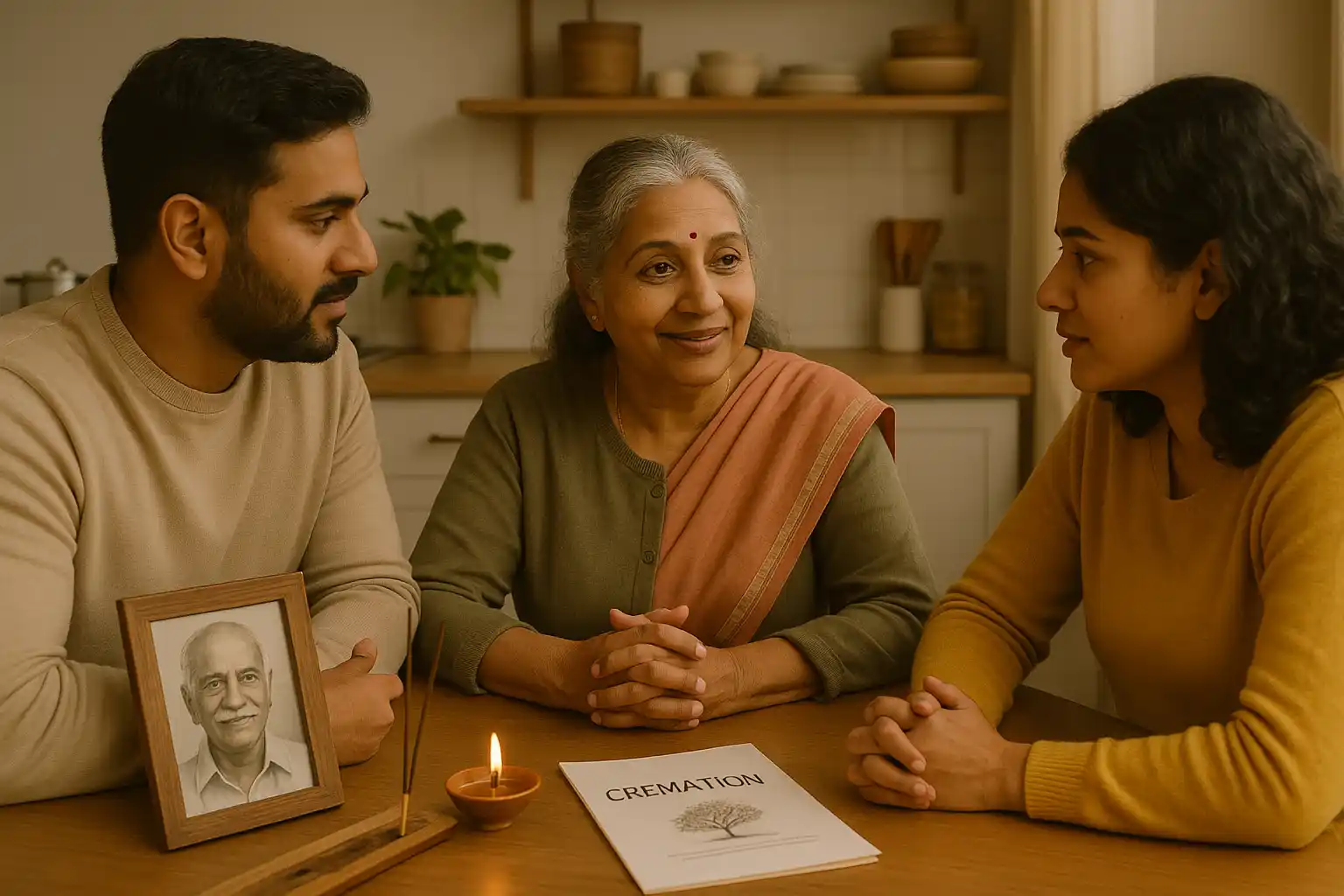
About This Blog

Most of us don’t want to talk about death.

We don’t want to think about it, plan for it, or make space for conversations that feel heavy or uncertain. And yet, if you’re reading this, chances are you’ve felt that quiet pull. Maybe after a diagnosis, a loss, or simply a growing awareness that someday, this will matter. Because it always does.

In a recent conversation on The Digital Legacy Podcast, Niki Weiss, founder of ENDevo, sat down with Greg Barnsdale, funeral director, financial planner, and author of Do Not Ignore Your Mortality, to talk about what it means to plan for the end of life with clarity and compassion.

It all starts with one truth: planning for death is not giving up. It’s showing up for the people who will one day have to carry on.


Avoidance is Normal. But It’s Not Helpful.

Greg has worked on both sides of the “mortality coin,” as it were. First as a funeral director, then as a financial advisor. In both roles, he’s seen a pattern: families caught off-guard, overwhelmed, and unsure what to do because no one had “the talk.”

He calls it deathbed estate planning: those panicked moments in the hospital hallway, when loved ones whisper, “Did anyone ask what they wanted?”

This isn't rare. It's common. And it's preventable.

It’s not always fear that keeps us from planning. Sometimes it’s superstition, believing that talking about death might invite it closer. Other times, it’s cultural conditioning. Topics like money, death, and even serious illness are often treated as taboo in Western societies.

But the truth is, death will happen, and it will happen on its own schedule. Waiting to address it doesn’t prevent it. It just makes it harder for the people we love.


Planning Is an Act of Care

Greg shares his own story openly. Two months after publishing his book, he was diagnosed with a brain tumor. It turned out to be benign, but he underwent radiation and faced real uncertainty. What gave him peace? Knowing his affairs were in order.

He had a will, powers of attorney, medical directives, and because of that, his energy could go toward healing; instead of scrambling to put pieces in place under pressure.

End-of-life planning doesn’t just ease legal or financial burdens. It offers emotional relief—for both you and those who love you.


Your Legacy Is More Than Money

One of the most powerful points Greg makes is that end-of-life planning isn’t just about who gets what. It’s about protecting relationships, creating clarity, and reducing conflict.

A thoughtful estate plan:

  • Minimizes family disputes

  • Keeps the courts out of your business

  • Protects your values and wishes

  • Allows for charitable giving and tax benefits

  • Strengthens the economy by reducing unclaimed assets

Think of it as relational wealth, not just financial wealth.


Where Digital Meets Deathcare

In today’s world, planning for death includes managing your digital estate: your passwords, online accounts, and personal data. Greg uses a simple binder and pencil to stay organized, but the key is this: make sure someone you trust knows where everything is.

That means:

  • Keeping login info updated

  • Assigning a digital executor

  • Making a list of key assets (bank accounts, subscriptions, social media)

  • Stating what you want done with your online presence

As more of our lives move online, organizing this aspect of your legacy is becoming just as important as drafting a will.


Not Sure Where to Start? Start Small.

Greg’s book offers practical tools to begin. On his website, you’ll find:

  • A short Living Legacy Quiz to assess your preparedness

  • 30 curated questions—15 for starters, 15 more advanced—to spark conversation with loved ones

These tools are designed to be approachable. You don’t need to know all the answers. You just need to begin the conversation. They can be found on DoNotIgnoreYourMortality.com.


Death Positivity Isn’t Morbid. It’s Empowering.

The death positive movement, which Greg and Niki both champion, isn’t about celebrating death. It’s about embracing life more fully by removing the fear and shame around its inevitable end.

It’s about saying:

  • “This is hard, and I’m doing it anyway.”

  • “I want to make this easier for the people I love.”

  • “I want to have a say in how I leave this world.”

And sometimes, it’s just about being curious: What would a good death look like—for me?


Let Planning Be a Gift, Not a Burden

You don’t have to do it all at once. You don’t even need to do it perfectly. But every step you take—writing down a password, having a conversation, drafting a will—is a powerful act of love.

And here’s the thing: these aren’t just end-of-life decisions. They’re life decisions.

They help us live more fully, love more clearly, and rest a little easier knowing that when the time comes, we won’t leave chaos behind.


If You’re Ready to Take the First Step:
Take Greg’s quiz or talk to a loved one about just one question from his list. Perhaps check in on your will—do you have one? Is it up to date?


Want to hear more?
Watch the full conversation with Greg Barnsdale on The Digital Legacy Podcast on YouTube. It’s thoughtful, honest, and might just give you the encouragement you’ve been waiting for.

Related Blog

Duis mi velit, auctor vitae leo a, luctus congue dolor. Nullam at velit quis tortor malesuada ultrices vitae vitae lacus. Curabitur tortor purus, tempor in dignissim eget, convallis in lorem.
The Gift of Asking: Why Funeral Registries Are the Future of Grieving

When someone we love dies, the silence that follows can be deafening. But almost immediately, another sound fills the air. It is the chorus of well-meaning friends and family asking, "How can I help?" It is a beautiful question that comes from a place of love. Yet, for the person deep in grief, that question can feel like a burden. You are exhausted and your brain is in a fog. You likely have no idea what you need, let alone how to articulate it. Maybe you need help paying for the funeral, which can cost upwards of $15,000. Maybe you just need someone to mow the lawn or pick up the kids from school. But saying that out loud feels impossible as it feels vulnerable. I recently sat down with Janet Turkula and Ryan Oliveira, the team behind GiveWillow, to talk about this exact dilemma. They have built something that feels both revolutionary and incredibly obvious. It is a registry for funerals. From Trauma to Tech: A Personal Story Janet’s journey to founding GiveWillow started in a place many of us fear. In 2010, she was just 21 years old when her father passed away suddenly . She was young, grieving, and completely unprepared for the reality of planning a funeral. Like many people, she assumed her dad would live well into his 80s or 90s. He was a blue-collar worker with no savings and no will . Suddenly, she was faced with funeral costs she could not afford while trying to process the trauma of losing her parent . Years later, a friend lost an uncle, and Janet wanted to help. She looked online for a way to send something meaningful. She wanted to do something other than sending flowers or a casserole. She found nothing . In a world where we can order a car or a meal with a single tap, there was no easy way to support a grieving family financially or practically. That gap in the market and in our culture of care birthed GiveWillow. Why a Registry? We have registries for weddings. We have them for babies. We even have wish lists for birthdays . These are all major life transitions where our community gathers around to support us. So why do we stop when it comes to the most difficult transition of all? A funeral registry works just like any other registry. You can select the specific things you need help with. This might include the big-ticket items like a casket, an urn, or catering for the reception . But it also includes the hidden costs that people often forget. These can include travel expenses for family members or even the fee for refrigeration at the funeral home. By listing these items, families can give their community a concrete way to help. Instead of a vague "let me know if you need anything," a friend can log on and see that they need help covering the cost of the flowers. It transforms a stressful question into a simple and actionable act of love. More Than Just Money One of the most touching parts of my conversation with Ryan was hearing about the "time and effort" feature on the platform. Not everyone needs financial help, and not everyone can afford to give money. But support comes in many forms. GiveWillow allows families to register for acts of service too. You can add items like "lawn care," "running errands," "childcare," or even just "sitting with me" to your registry . This is profound because it validates those needs. It tells the grieving person that it is okay to need help with the laundry or to need someone to drive the carpool. And for friends who want to help but do not have extra cash, it gives them a way to show up that is just as valuable. Breaking the Silence Around Cost We rarely talk about the price tag of death. It feels taboo to put a dollar amount on a funeral as if it somehow cheapens the loss. But the reality is that funerals are expensive. Ryan mentioned that simply going through the process of building a registry can be an eye-opening educational tool. It allows you to see the "sticker price" of your wishes before you are in the emotional heat of the moment. You might realize that the big party with the margarita bar you envisioned costs $15,000 . Knowing that ahead of time allows you to plan. It allows you to ask for help specifically for that celebration rather than being blindsided by the bill later. This transparency empowers families by taking the mystery and the shame out of the financial conversation. A Tool for the Living While GiveWillow is a lifeline for those who have just lost someone, it is also a powerful tool for those of us who are still here. We often think pre-planning is only for the elderly or the sick. But as Janet’s story reminds us, death can be sudden. Creating a registry now, even if you are young and healthy, is a gift to your future self and your family. It acts as a roadmap. It tells your loved ones exactly what you want. Do you want cremation? A green burial? A big party? It removes the guesswork during a time when their brains will be foggy with grief. Ryan noted that they are even seeing people with terminal illnesses use the platform to ask for help with medical bills alongside their funeral wishes . It is becoming a holistic way to support someone through their end-of-life journey. Overcoming the "Ick" Factor I know what some of you might be thinking. "Is it tacky to ask for money for a funeral?" "Does this feel too much like crowdfunding?" Janet was clear that this is not just about raising funds. It is about re-gifting community support. It is about channeling the love that people already want to give into the places where it will actually make a difference. We have all seen the GoFundMe campaigns that circulate after a tragedy. They have their place. But a registry feels different because it feels personal and intentional. It allows a friend to say that they bought the flowers for Dad's service rather than just throwing money into a pot. It creates a connection between the giver and the receiver that is rooted in care rather than just cash. A Small Step You Can Take Today If you are reading this and feeling a little overwhelmed, that is okay. You do not have to plan your entire funeral today. But maybe you can take one small step toward opening the conversation. Check out GiveWillow just to see what a funeral registry looks like. Notice the categories. See what things cost. Talk to your partner or a close friend about one thing you might want or definitely do not want at your own service. Breaking the silence is the first step toward taking back control. Death is the one certainty we all share. By planning for it, and by allowing our community to support us through it, we are not being morbid. We are being human. We are letting love have the last word. 🎧 To hear Janet and Ryan’s full conversation with Niki Weiss, watch the episode on The Digital Legacy Podcast. You can also explore their platform at GiveWillow.com.

Comments